
Unveiling the Two Sides of Faith

Step into the next chapter of our exploration in “Weaving Prayer and Faith into the Fabric of Your Life”. Embark on a faith journey that teaches us the art of navigating through trust, patience, thankfulness and belief.

Faith, according to the Bible, has two sides: one where you ask for things through prayer and another where you accept and appreciate the good things you receive. Paul often talks about this dual nature of faith, linking prayer with making requests and thanksgiving with recognizing blessings (Philippians 4: 6-7). It is essential in our Christian journey to understand both aspects. Instead of always asking for things, there is a crucial moment when we should start appreciating what we have. As Mark 11:24 says, “Believe that you have received, and you shall have.”

In our Christian journey there comes a time to move

from asking

to receiving.

This shift highlights the importance of distinguishing between God’s promises and realities. Promises are something we eagerly anticipate, praying for their fulfillment, while realities are things we acknowledge and promptly embrace. The real power and blessings come from the faith that seizes. The more we trust in this way, the more abundance and strength enter our Christian lives. Every day, we can live a life of faith, echoing what Paul declares in Philippians 4:13, “I can do all things through Him who is empowering me,” and confidently affirming, “The life I now live in the flesh, I live by faith in the Son of God Who loved me and gave Himself for me” (Galatians 2:20).

In his insightful work, “A Living Sacrifice,” Watchman Nee navigates the intricate landscape of faith, offering a thought-provoking analogy that paints faith as a coin with two distinct sides.

Proactive faith, akin to a dynamic force, propels us into action as we actively seek and make requests. On the other side, receptive faith becomes a profound expression of gratitude for the blessings we have received. Together, these dual dimensions of faith provide a picture of the dynamic interplay between our seeking and thankfulness at the same time.

Consider the distinction between asking God to make you grateful and actively being grateful. The variance lies in the perspective and approach you adopt towards gratitude.

When you ask God to make you grateful, you are essentially requesting a shift in your own disposition and mindset, acknowledging  that your current level of gratitude may not be as profound as desired. You seek divine assistance to nurture a more appreciative attitude, signaling a desire for internal transformation.

Conversely, being grateful is a deliberate and conscious practice. It goes beyond external circumstances, involving the active acknowledgment and appreciation of all facets of your life. Thankfulness becomes a personal and intentional choice, a continual practice of recognizing the blessings even in challenging situations.

The words of Philippians 4:6-7 capture this beautifully: “Be anxious for nothing, but in everything by prayer and supplication with thanksgiving let your requests be made known to God. And the peace of God, which surpasses all comprehension, will guard your hearts and your minds in Christ Jesus.”

Embracing both the request for transformation and the active pursuit of gratitude, result in a profound sense of peace through the combination of personal choices and spiritual guidance.

So, how does one maintain and strengthen their faith through prayer?

Discovering the profound wisdom within Mark 11:24,“Believe that you have received, and you shall have,”  Watchman Nee unfolds a transformative perspective on prayer. The essence of this verse revolves around three crucial principles:

Pray with Empty Hands: Commence your prayers even when tangible outcomes are yet to manifest. The journey begins with faith preceding evidence.


Persist in Belief with Empty Hands: Despite the absence of immediate results, persist in unwavering faith. Continue to believe in the fruition of your prayers, clinging to the conviction that they will be granted.

Shift in Faith: The turning point arrives when you shift your belief. Instead of focusing on lack, start thanking God as if the desired outcome is already in your possession. Gratitude precedes manifestation, and as you consistently uphold this transformed belief, you witness the answers to your prayers materializing.

Allow me to share a personal testimony that exemplifies the power of these principles. My son, David, experienced tumultuous years as he navigated the challenges of growing into manhood. Despite his prolonged pretense of faith, his actions failed to align with a genuine love for the Lord. For years, my prayers for his salvation were met with tears and sorrow.

Faced with desperation, I made a conscious choice to express gratitude to God for David’s salvation. Every day, I thanked God, acknowledging that I was one day closer to witnessing the fulfillment of my prayers. When inquiries arose about David’s well-being, my response echoed with unwavering faith: “Praise God, I am one day closer to seeing him born again!”

In a beautiful culmination, the manifestation of this transformed belief unfolded over a decade later. A phone call from David revealed the miraculous news – he, along with his family, had embraced Jesus Christ as their Lord and Savior. This profound experience serves as a testament to the power of prayer, the unwavering belief in the unseen, and the transformative power of gratitude. Through these principles, we not only pray but also witness the divine orchestration of answered prayers in our lives.

Hebrews 11:1: “Now faith is the assurance of things hoped for, the conviction of things not seen.”
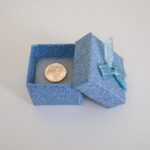
So, in simple terms, faith is like a two-sided coin, and when you pray, believe, and thank God even before you see the results.

In our subsequent discussion, we will explore the significance of persistence in prayer. We will delve into the delicate balance between maintaining persistence in prayer and simultaneously upholding faith and gratitude towards God, even before witnessing tangible results. Stay tuned for a deeper exploration of this dynamic interplay in our spiritual journey.


Weaving Faith and Prayer into the Tapestry of Life


Embarking on the journey of unlocking the profound power of answered prayers has led us to a crucial connection:

“Faith: The Unseen Force”

Jesus said to His disciples, “All things for which you pray and ask, believe that you have received them and they will be granted you (Mark 11:24).”

Examine the message conveyed by this verse and take note of its nuances:

“Those who believe they have received – already have received.”

However, it is common for us to phrase it differently:

“Those who believe they will receive – shall obtain it.”

Watchman Nee articulates the existence of two distinct types of faith:

the faith in having already received

and

the faith in the anticipation of receiving.


The difference between these two perspectives is substantial, akin to the contrast between night and day.


Seeking through prayer, questioning, and maintaining belief all demand the presence of faith.

However, what exactly constitutes faith?

Faith, as outlined in the Blue Letter Bible, can be equated with trust or belief. It embodies the deep conviction in the truth of a matter, particularly in the context of one’s relationship with God.

In Scripture, faith is characterized by a profound belief accompanied by trust and a sacred passion. It also imparts the qualities of reliability and steadfastness to the individual who possesses it.



 

Faith is like a flower opening up in the sunshine. It’s like when the petals of a flower unfold and show the inside. Just as the sun helps the flower grow and be colorful, faith lets us grow and be our true selves. Think of it as the starting point for everything else, like how the spark of sunlight brings life and beauty to the flower. (Alexander Maclaren)

In its diverse expressions, faith is like holding onto something vital, even though you cannot see it. It involves entering into a covenant with God confidently, anticipating that He will respond to prayers, even in the face of delays and outcomes not aligning with personal desires.

It is an unconditional reliance on God’s character.


 

The term implies both knowledge and action. One may receive knowledge of a certain truth and may even offer verbal agreement, but “trust” or “confidence” is not said to be present until one’s behavior reflects that truth. (Charles Swindoll)

George Mueller states that if you start worrying too much, it means your faith might be slipping away.


Genuine faith is sticking to your beliefs, no matter what happens, and it provides a solid foundation for your spiritual journey. It is a powerful force that helps you understand, endure, and trust, shaping what you believe in.

A.W. Tozer defines faith as a state of maintained confidence (boldness, assurance) in God. Faith and patience are partners. Give faith time to work! My prayer has to be based upon my faith in God, and that faith is based upon my confidence in Him and who He says He is.



In this intricate tapestry of definitions, faith emerges as the dynamic force that unfolds, grasps, endures, and trusts—an essential element that not only shapes our beliefs but also defines our spiritual journey.

Faith is not the destination; it is the journey.

In the parallel passage, Matthew 21:20-22, Jesus responds to the disciples’ question:  “How did the fig tree wither all at once? Truly I say to you, if you have faith and do not doubt, you will not only do what was done to the fig tree, but even if you say to this mountain, ‘Be taken up and cast into the sea,’ it will happen.  And all things you ask in prayer, believing, you will receive.”

 It is noteworthy that those questioning Jesus about the cursed fig tree do not seek an explanation from Him.

Rather than providing a detailed clarification, Jesus redirects their attention from the lifeless fig tree to the living God.

He underscores the crucial importance of placing faith not in an abstract concept or blind belief but in the dynamic and omnipotent God whose power they have witnessed.


The critical takeaway lies in understanding that genuine faith extends beyond mere confidence in “faith” itself or in vague principles—it is rooted in a personal and living connection with God.

The quality of faith hinges on the reliability and steadfastness of its object, and in this context, it is the unwavering and faithful nature of God.

Faith is that unseen force weaving its way through the tapestry of our lives, offering comfort in uncertainty and hope in the face of adversity.


It is the quiet strength that steadies us when the road is rocky and the light that illuminates our darkest hours.

Take a moment to gaze back at the winding road of your life. Reflect on the moments that stand as testaments to faith—the highs and lows. Ponder those instances when faith was not just a concept but a tangible presence guiding you, shaping your decisions, offering comfort in times of distress, and weaving a tapestry of meaning into the seemingly random events of your life.

What lessons have you gleaned from the interplay of faith and circumstance? How has it shaped your perspective, relationships, and choices?

In the upcoming Part Two of “Faith, the Unseen Force,” we’ll delve even deeper into the multifaceted nature of faith. We’ll explore how it manifests in the intricate tapestry of your personal journey and discover the profound impact it continues to have on the chapters yet to unfold.

So, until then, keep reflecting, keep believing, and stay tuned for the next chapter in our exploration of faith. Your journey is a story still in the making,

and faith is the thread that binds it all together.


Until next time, may your path be filled with the unwavering presence of the unseen force that guides us all.

“The Compass of the Soul: An Examination of Our Spiritual Heart


In our recent post, titled “Unlocking the Power of Answered Prayers,” we probed into the profound impact of exactness in our requests, emphasizing the transformative potential of seeking answers with utmost clarity.

The words of wisdom in Matthew 7:7 and Luke 11:9-10  echo a powerful truth that those who earnestly ask receive, those who diligently seek find, and those who persistently knock will witness doors opening before them. These verses serve as a compass, directing us toward the path of fulfillment through intentional prayer.


James 4:2 delivers a cautionary reminder, prompting us to be mindful of the importance of being specific in our petitions, highlighting the potential consequences of vague or misguided prayers.

Prayer is a dynamic interaction with our Creator; just as an artist carefully selects each brushstroke to create a masterpiece, so too must we articulate our needs to our Heavenly Father with clarity.

Wrestling with Unanswered Prayers

Have you ever poured your heart into specific prayer requests yet encountered the silence of unanswered prayers? Despite your genuine intentions and sincere requests, it might seem as though an unseen barrier stands between you and God’s throne.

The psalmist in Psalm 66:18 reveals a crucial insight: “If I regard wickedness in my heart, the Lord will not hear.” This verse encourages us to examine our hearts honestly.

Could there be lingering sin that we hold onto, refusing to release it? It’s essential to differentiate between mere weaknesses—those stumbling blocks we often encounter—and deliberate choices to cling to sinful thoughts or actions.

John 9:31 adds another layer to our understanding: “We know that God does not hear sinners; but if anyone is God-fearing and does His will, He hears him.” This verse emphasizes the significance of a God-fearing heart aligned with His will. It prompts us to evaluate our commitment to living in accordance with God’s plan.

Question to ask:  Is Wickedness Lurking?

Let’s turn the spotlight inward. Ask yourself the hard questions. Is there any wickedness in my heart—a sin that lingers, a conscious choice to hold on despite the call for release?

Again, we are not wrestling with mere weaknesses that trip us up; it’s about confronting those thoughts or actions that we are fully aware of and consciously choose to retain.

It’s crucial to acknowledge that spiritual growth involves a continuous process of self-examination and surrender. Identifying areas of darkness within ourselves is the first step toward a more profound connection with our Heavenly Father.

But what about the man in Romans 7, you may be asking? Note that he confesses to doing things he hates, highlighting the internal battle between his longing to do God’s will and the imperfections of his actions. It’s crucial to recognize that the man in Romans 7 is not defeated by his sin but is actively wrestling against it.


His declaration of hatred towards his actions signifies a crucial aspect of the believer’s journey – the awareness of wrongdoing and the desire for transformation.


This acknowledgment sets the stage for redemption and showcases the sincerity of the individual’s faith. The critical element in this narrative is the man’s refusal to accept his sin complacently. Despite his failures, he resists becoming content with a life contrary to his beliefs. This refusal to embrace sin, both in conduct and heart, becomes a pivotal point in the journey toward spiritual growth.



The choice to harbor sin in one’s heart can hinder the effectiveness of prayers, echoing the biblical principle that a heart devoted to sin can create a barrier between the individual and a responsive relationship with our Lord. However, the narrative in Romans 7 also demonstrates that the struggle against sin, coupled with genuine repentance, opens the door to a more profound connection with God.

The Power of Transformation

In the tapestry of our spiritual journey, the threads of sin often weave themselves into the fabric of our lives. It’s a struggle that many of us face – the challenge of overcoming our shortcomings. But in this chaos, there’s a whisper from the Holy Spirit urging us not to let iniquity take root in our hearts.

Imagine your faith as a garden, where doubts and struggles are weeds threatening to overshadow the blossoms of belief.

The struggle may seem discouraging but know this: God is more interested in the state of your heart than the momentary shadows on your faith’s landscape. It’s a call to dive deep into the recesses of our hearts, where the battleground against sin truly lies.

“Let the words of my mouth and the meditation of my heart
Be acceptable in Your sight,
O Lord, my rock and my Redeemer.”
Psalm 19:14

By acknowledging our failures, hating the sins we commit, and actively resisting the pull of wrongdoing, we position ourselves for a transformative journey of faith.

As we navigate this path, be encouraged by the understanding that our struggle is not in vain; it is a testament to the fact that trials may mark our journey, but it is the commitment to resist sin and pursue righteousness that defines our character.


“We exult in our tribulations, knowing that tribulation brings about perseverance; and perseverance, proven character; and proven character, hope; and hope does not disappoint, because the love of God has been poured out within our hearts through the Holy Spirit who was given to us.” Romans 5:3-5

The challenge lies not just in overcoming external trials but in addressing the internal battles—the doubts, the uncertainties, and the wavering resolve. We must confront the shadows within, addressing every sin that lurks in the corners of our hearts. It’s a call to hate each transgression, not to retain or love even a single iniquity. For in the thorough dealing of the heart, true freedom is found.

Prayer, as our guide in this journey, becomes our sanctuary. It’s not merely a recitation of words; it’s a heartfelt conversation with the Lord, a moment to lay bare our souls, acknowledging our weaknesses and our struggles, seeking forgiveness and guidance. The wisdom of Proverbs 28:13 echoes through time, reminding us that “the one who conceals transgressions will not prosper, but the one who confesses and forsakes them will find compassion.”

Yet, unspoken doubts can create barriers between you and your God. It’s like trying to converse through a foggy window. It’s futile to ask for grace while holding onto the very sins we wish to be free from.

The first step is acknowledging those struggles. Lay them out before your Heavenly Father,  surrendering the burden that hinders your connection.

As we close our eyes in prayer, let our hearts echo a sincere plea: “Here is a sin which my heart does regard and finds hard to give up, but now I ask for your forgiveness. I am willing to forsake it; I ask you to deliver me from it so that it may not remain with me. I do not want it, and I resist it. Strengthen my faith, help me overcome these doubts, and guide me back into the warmth of your love.”

In this moment of vulnerability, of surrender, we are not alone. Our Heavenly Father listens, understands, and extends an invitation to renew our faith. It’s a journey of redemption, a call to cast away uncertainty and embrace a revitalized connection with our Lord. It’s a journey of transformation, of shedding the old and embracing the new.

You will be led to a place of unwavering faith, where doubts transform into stepping stones,  propelling you toward a deeper understanding of the Creator’s boundless love. The struggle is part of the journey, and in overcoming it, you find a renewed sense of purpose and a faith that stands resilient against the winds of uncertainty. May our hearts be cleansed, and may our spirits soar in the light of forgiveness and grace. May this journey lead us to a deeper connection with God and a life marked by compassion, humility, and genuine repentance.
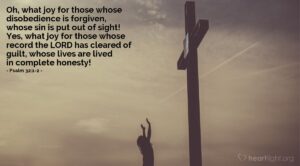


Unlocking the Power of Answered Prayers


Whatever you ask in My name, that will I do, so that the Father may be glorified in the Son. If you ask Me anything in My name, I will do it. John 14:13-14

If you abide in Me, and My words abide in you, ask whatever you wish, and it will be done for you. John 15:7

In the above verses, we are reminded of a powerful truth: our prayers are meant to be answered.

But the real question is, do we approach prayer with unwavering faith? Do we truly believe that our Heavenly Father not only hears us but will respond to our heartfelt cries? Prayer is not merely a spiritual discipline; it is a profound connection to the Divine. It is about being heard by the One who reigns in heaven.

In the hustle and bustle of our daily lives, we often find ourselves in moments of deep reflection, seeking guidance and yearning for answers to our most pressing questions. A. W. Tozer beautifully articulates that prayer should be as natural as breathing. It is a lifeline to the Creator, an intimate conversation with the Almighty. It is a reminder that our petitions, our hopes, and our needs are not lost in the vast expanse of the universe but are lovingly received by the One who cares for us.

So, let’s not approach prayer with doubt but with the confidence that our Father in heaven is always listening, ready to respond to the cries of our hearts.

As we delve into the sacred pages of the Bible, we discover a roadmap to the fulfillment of our deepest desires in the form of conditions for answered prayer.

In this exciting blog series, we’re setting out on a voyage through the profound teachings of Scripture exploring these transformative conditions one by one. Together, we’ll discover how these insights can elevate our prayers from mere words into life-changing, powerful experiences. “O taste and see that the Lord is good”. (Psalm 34:8 )

Ask with Purpose

In Matthew 7:7 and Luke 11: 9-10,  we are encouraged

to ask,

to seek

and to knock.

But it’s not merely the act of asking that matters; it’s the sincerity, the intent, and the authenticity behind our requests that genuinely make the difference. Let’s investigate the art of asking and how this simple yet profound principle can transform the way we experience answered prayers.

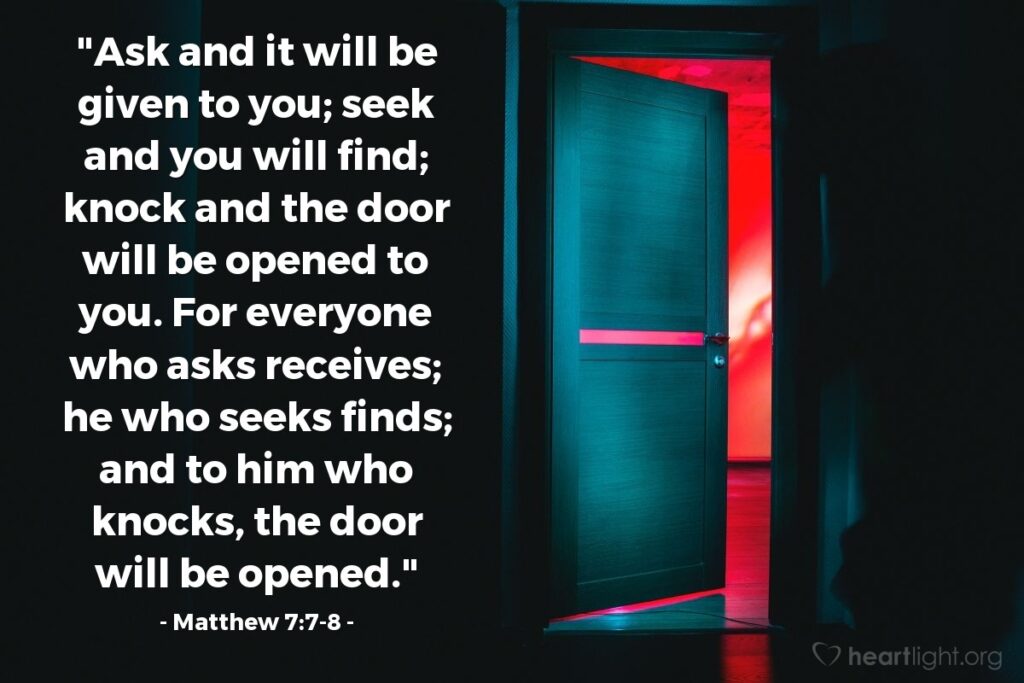
Ask, and it will be given to you; seek, and you will find; knock, and it will be opened to you. Matthew 7:7

“So I say to you, ask, and it will be given to you; seek, and you will find; knock, and it will be opened to you. For everyone who asks, receives; and he who seeks, finds; and to him who knocks, it will be opened.”  (Luke 11:9-10) “…You do not have because you do not ask.” (James 4:2)

The above verses remind us that our prayers should flow from the depths of our hearts, guided by genuine intent and a pure spirit. When we approach the Divine with honesty, laying bare our hopes and desires, we open the door to the miraculous. It’s about more than just personal gain; it’s about aligning our wants and needs with a higher purpose – God’s heart.

Take a moment to reflect on your own prayer life. Do you pray to be heard, or do you simply go through the motions? Have you experienced the joy of answered prayers?

If you keep a prayer journal, go back and examine it. How many of your requests have been met? Are your prayers vague and general, or are they specific and heartfelt?


I, too, embarked on this introspective journey. I discovered that many of my daily prayers were more like well-worn routines than genuine conversations with the Divine. It was as if I were asking God for the sun to rise tomorrow, an event that would unfold whether I prayed or not. I was knocking on the door, but I had never honestly shared my deepest needs and desires with the One who could provide.

The key to unlocking the power of prayer lies in the specificity of our requests. When we pour our hearts into our prayers, when we dare to be vulnerable and authentic, the Divine listens. It’s not about asking for the world but about sharing the desires that burn within us, the dreams we long to see fulfilled. It’s about being unapologetically ourselves in the presence of the Divine.

When our hearts and souls yearn for something greater, we often find ourselves in search of answers, guidance, and miracles. We look up to the heavens, hoping for a divine intervention to ease our burdens and fulfill our deepest desires. But here’s a thought:

What if the key to unlocking those miracles lies not in vague, general requests but in the unwavering power of specific, honest, and unreserved prayer?



Let’s begin by acknowledging the profound truth that our intentions shape the course of our journey. To truly harness the power of prayer, we must allow our requests to be guided by pure intent. When we open our hearts to the Father, when we seek with sincerity and a genuine desire for positive change, miracles become not only possible but certain.

You see, God is listening and is ready to respond to your calls. But here’s the catch: our problems and difficulties are unique, intricate, and highly specific.

If we offer vague and general prayers, we risk missing the mark.

It’s like trying to fit a square peg in a round hole. We are asking amiss (James 4:2).  How can the Divine answer when the request is masked in vagueness?

So, let’s dare to be specific in our conversations with the Divine. Dare to be honest about your struggles, your desires, and your dreams. Lay your heart bare, unreserved and unafraid. When you articulate your needs clearly and with utmost sincerity, you send a powerful message: “I am ready for change, and I believe it’s possible.”

In the realm of specific, honest prayer, miracles unfold in ways you never thought possible. You’ll discover that our Creator has a remarkable way of aligning circumstances, connecting people, and guiding your path toward the fulfillment of your desires. The pieces of the puzzle will fall into place, and you’ll witness your intentions manifest before your very eyes.

When you dare to be specific in your prayers, you declare your readiness to receive the help you need. Your faith, your sincerity, and your clarity of purpose will create a powerful working together that transcends the ordinary and steps into the extraordinary. Miracles will follow because you have paved the way for them with your heart wide open and your intentions pure.

So, my friends, let us embark on a journey of specific, honest, and unreserved prayer. Let’s trust in the power and the willingness of our Heavenly Father to answer our calls. In this sacred exchange with the Divine, you’ll find that miracles are not a distant dream but a tangible reality, waiting to grace your life with their extraordinary presence. Dare to be specific, and let the miracles unfold.

Embracing the Night Season


Life is a journey filled with seasons, and just like the changing seasons in nature, our lives also go through different phases. Some seasons are bright and joyful, while challenges and darkness mark others. One such season, often referred to as the “night season,” carries a deep and profound spiritual significance as it is ordained by God and filtered through the Father’s loving hands. It signifies a period in a believer’s life when we are permitted to experience emotions characterized by darkness, confusion, and isolation, even in the absence of known sin.

It can feel like the light has dimmed in the night season, and you are stumbling through life in spiritual dimness. You may find it challenging to discern God’s presence or purpose in your circumstances. This darkness can manifest as doubts, fear, or spiritual dryness. Your once-clear path may become clouded with uncertainity. Questions about your faith, purpose, and relationship with God may arise. This confusion can be disorienting and unsettling.

The night season often carries a feeling of profound isolation.  It may seem as though you are walking this path alone, without the support or understanding of those around you. This isolation can be emotionally and spiritually taxing.

It’s crucial to understand that the night season is not a punishment but a divine appointment. It is a season ordained by God for your spiritual growth and refinement. Just as gold is purified in the fire, so too is your faith refined in the crucible of the night season. In the Bible, we see examples of individuals like Job, David, and even Jesus Himself experiencing their own dark nights of the soul.


On September 13, 2020, a season of darkness descended upon my life. The world was in turmoil, and I also faced personal trials. It was a period of uncertainty and despair, lasting until July 24, 2023. My faith was tested in ways I could never have imagined during this time.

I could identify with Job, a man cherished and blessed by God, who cried out, “…nights of trouble are appointed me. When I lie down I say, ‘When shall I arise?’ But the night continues…” (Job 7: 3-4). It puzzled me how a man as virtuous and upright as Job could undergo such a profound period of darkness. Unwavering in his faith, Job faced a season of anguish permitted by God. Job remained resolute in his faith, never faltering in his belief in God. Yet, God allowed this cherished man to navigate a season of profound sorrow. The question lingers: Why?In the midst of my struggles, I turned to 1 Corinthians 13:4-8, which became my guiding light. Those verses spoke of love’s patience, kindness, and endurance. They reminded me that love was not just a feeling but a choice, an action, and a commitment.

In my night season, I learned the true essence of love. I discovered that loving the Lord with all my heart meant trusting Him even in the darkest times, knowing He was there with me, guiding me through the storm. I learned to love with all my soul by surrendering my worries and fears to Him, finding solace in His presence.

My mind was filled with thoughts of God’s goodness, and I meditated on His word, finding comfort and wisdom in the scriptures. And with all my strength, I served others selflessly, realizing that in helping those in need, I was expressing my love for God.
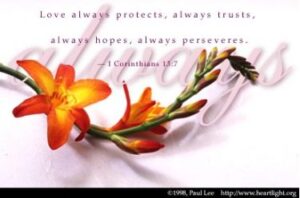
But my journey wasn’t just about my love for God. It also transformed my love for my husband, Mel. I learned that the same principles of love I applied to my relationship with God could be helpful in my marriage, particularly as I became Mel’s caregiver. I became more patient, kind, and forgiving, understanding that love was not just an emotion but a daily choice to cherish and support my husband.

As Mel neared the end of his earthly journey, the darkness of my night season began to be lifted. I emerged with a newfound understanding of love. I now knew that loving the Lord with all my heart, soul, mind, and strength was a continuous journey, a daily commitment to trust, seek, and serve. And I realized that this love, as described in 1 Corinthians 13, was the source of my strength, enabling me to weather any storm and love both God and Mel more deeply than ever before.

Mel taught me about agape love. He willingly gave his all to me as we walked his final journey together, ending July 24, 2023. Mel taught me how to hang on during the night season and opened the door to my understanding of agape love.

What did Job come to understand about his night season? What did I come to realize about my night season? Job’s statement in Job 42:5 is his response after God intervenes and speaks to him in a whirlwind. “I have heard of Thee by the hearing of the ear, but now mine eye sees Thee…” (Job 42:5).  In this divine encounter, God doesn’t directly answer Job’s questions but instead emphasizes His divine wisdom and sovereignty. Job realizes the limitations of his own understanding and acknowledges that he had heard about God through secondhand accounts (hearing of God by the hearing of the ear).

However, in the midst of his suffering and through this encounter with God, Job’s spiritual perception deepens, and he “sees” or “experiences” God more profoundly, leading to a transformation. His faith and trust in God are strengthened, and he gains a deeper, more intimate understanding of his Creator.

In the book of Job, we find a story that is both timeless and deeply meaningful, one that metaphorically represents the night season or a period of darkness that many of us may experience in our lives. Through Job’s story, we can see that suffering can lead to a transformative encounter with God, strengthening our faith and trust and, ultimately, allowing us to experience God profoundly and personally.

Job’s story is one of enduring faith in the face of unimaginable suffering. Like many of us, he faced trials and tribulations that seemed impossible. He lost his wealth, health, and even his family, and his friends offered no solace. It was as if he was engulfed in a never-ending night, an impenetrable darkness. But it was amid this darkness that Job’s transformation journey began.

In the same way, I, too, have experienced my own night season, a time of profound hardship and suffering. It was a period in my life when I felt lost, hopeless, and utterly alone. I faced challenges that I thought I could never overcome, and I questioned the purpose of my existence. It was as if I was wandering in the darkest of nights, searching for a glimmer of light.

But just as Job’s suffering led to a deeper understanding of God, my own struggles eventually brought me to a transformative encounter with the Divine. I clung to my faith through the pain and heartache, much like Job did. I prayed, sought comfort in Scripture, and poured out my heart to God. And it was during those long nights of suffering that I, too, was transformed.

Job 42:5, “I have heard of You by the hearing of the ear, but now my spiritual eye sees You...”, captures the essence of my journey. I knew God and experienced His promises and love, but I truly experienced His presence during my darkest moments. It was as if a veil had been lifted, and I could see God with new eyes that perceived His love, grace, and unwavering presence in my life. My suffering, much like Job’s, led to significant spiritual growth. It deepened my faith, strengthened my trust in God, and allowed me to transition from merely knowing God to experiencing Him intimately.


In conclusion, the story of Job serves as a powerful metaphor for the trials and tribulations we all face in life. It reminds us that even in our darkest moments, there is hope for transformation, for a deeper connection with the Divine. Through our suffering, we can grow spiritually, strengthen our faith, and experience God profoundly and personally. May we all find the strength to persevere through our own night seasons and emerge into the light of a transformative encounter with the Divine.


When God Provides: Finding Hope and Creativity in the Midst of Plumbing Problems

Have you ever found yourself in a situation where you feel stuck and unable to move forward? Maybe you’ve been feeling this way for a while, and it seems like nothing is working out for you. Perhaps you’ve accepted lies about yourself or convinced yourself that things would never change. But I want to encourage you today that there is hope and that things can turn around.

Recently, I experienced a situation where I turned on the water faucet, but there was no water. I thought I had fixed the issue, but nothing seemed to work. However, instead of giving up and accepting the situation, I decided to be creative and find solutions. It wasn’t easy, but with faith and perseverance, we overcame the challenge.

We were without water to the house for one week, but God provided us with nice weather and enough containers to fill with water directly from the well. It was a time of testing and being creative in finding solutions as each new challenge confronted us.

When repaired, the plumber showed me the problem – a clogged pipe. When you hold it up to the light, you only see 2 very small pen holes which supplied water to the entire house. And I was always told we have low water pressure because our system is old.

The clogged pipe on my kitchen counter is a powerful reminder of the consequences of accepting situations.


For years, I convinced myself that our low water pressure was just a fact of life. I adapted to it, making small adjustments here and there to accommodate the limitations of our plumbing. But in doing so, I was shutting down the flow of energy, power, love, and transformation in my home.

Life is full of unexpected twists and turns; sometimes, things don’t go as planned. Sometimes, we adapt to our circumstances and adjust to accommodate our limitations. But in doing so, we can shut down the possibility of God’s blessings and provision in our lives. We must remember that we serve a God who is a way-maker and can make a way where there seems to be no way.



It’s easy to get discouraged and lose hope when we face difficulties, but we must trust that God has a plan and a purpose for our lives. If you’re facing a situation in your life that you know isn’t healthy or sustainable, it’s time to take action. Don’t settle for less than God’s best in your life. Pray for wisdom and discernment to know what steps to take, and have faith that God will provide for your every need.

Take a moment to reflect on the promises of God.

He promises to give us hope and a future (Jeremiah 29:11), to work all things together for our good (Romans 8:28), and to never leave us nor forsake us (Hebrews 13:5). These promises are not just words on a page; they are truths that we can hold onto and believe.

It’s never too late to make a change in your life.

Don’t let fear or complacency hold you back from experiencing the abundant life that Christ promises. Step out in faith, and trust that God will guide you every step of the way.

So, my friend, don’t give up hope. Keep pressing forward.

Trust that God has a plan for your life. He can make a way where there seems to be no way and provide for your every need. Be creative, stay positive, and believe that better days are ahead.

Remember, you are loved, valued, and capable of achieving your dreams. Keep pressing forward, and don’t give up hope. God has a plan and a purpose for your life, and He will work all things together for your good (Romans 8:28-29).

With love and encouragement,
Neva

David’s Evening Walk

Yesterday my son, David, and I had planned to clear the way to a fallen tree in our back acreage, preparing for next fall’s wood supply, but instead, we changed our plans due to the falling snow we have been experiencing all week.

 

Last week beautiful Pacific Northwest spring weather –




This week return to winter.

This morning I found this email about his evening walk. So beautifully expressed as Sunday, we celebrate our Lord’s Resurrection. I hope you will be inspired to stop, remember, and look at God’s glorious creation! If we remain in His Presence, He will always reveal Himself to us.

We must have our spiritual eyes, ears, and heart ready to receive!


David wrote:

This one is the American Winterberry.

It reminds me of a lowly, humble plant growing on the forest floor with berries. Notice the tear stains on the leaves; berries now pink will turn red like sweat drops of blood. This plant is easy to miss unless you have the eyes to see it.

This one is the Oregon Grape.

It reminds me of a golden crown of thorns.

The golden berries soon turn royal purple.


The Avalanche Lilly with six white petals represents the day man was created with a center crown of gold, a promise from our risen LORD to them that love Him. “Jesus was God and man in one person, that God and man might be happy together again.”—-George Whitfield

The Avalanche Lilly reminds me of being closest to the sun, which will cast a shadow no matter which cloud you are in.


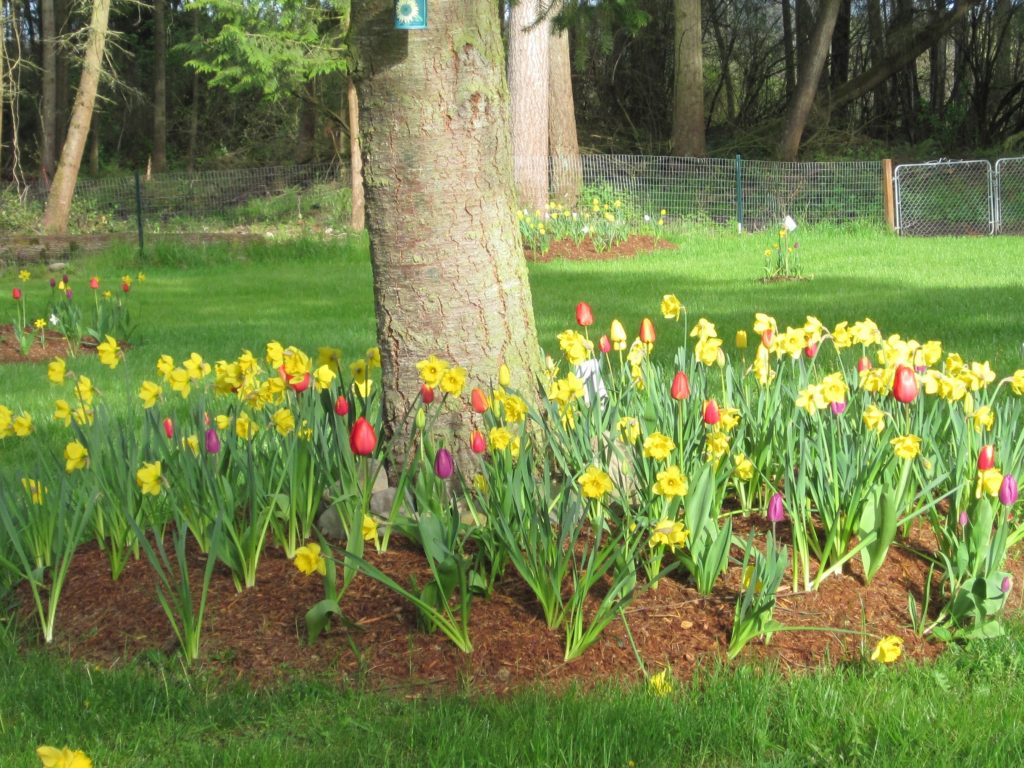
Psalm 91:1 “He that dwelleth in the secret place of the most high, shall abide under the shadow of the most high.”


Enter into His Presence


My daffodils are almost gone  – ready to go asleep for another year! I do love the beauty of spring. Yes, even the spring rains! Suddenly (so it seems), you see flowers popping up their heads from their winter rest, and then WOW, their colors burst forth!

Seemingly overnight, I see this happening year after year with my forsythia bush from my kitchen window. And so beautiful when it is full of its rich, yellow blossoms screaming –



With spring and its  beauty also comes the time when we pause  and celebrate our Lord’s death, burial, and resurrection – Easter.

When my children were younger and then with my granddaughters, I remember gathering together for this special day. Yes, we colored Easter eggs and hunted for them in the yard or house, depending on the weather, followed by a delicious family dinner.

Before enjoying our delicious ham dinner, we walked through our Savior’s last week on this earth using a set of Resurrection Eggs.  Each of us opened our egg and retold a portion of His journey during that week.  So many wonderful and glorious memories!

My theme for 2022 is Living in the Radiance Presence of the Lord. I have thought a lot about what it means for me as I walk the road of Alzheimer’s with my husband. The parable of the old and new wineskins has been incredibly insightful for this journey.

“No one puts new wine into old wineskins that have lost their elasticity; otherwise, the wineskins burst, and the fermenting wine spills, and the wineskins are ruined. But new wine is put into fresh wineskins, so both are preserved.” (Matthew 9:17)  

How does this translate into living in the radiant presence of the Lord?

What does it have to do with the arrival of spring?


As my husband forgets old skills and routines, I need to learn new skills and new ways. To accomplish this task, I choose not to force the old of yesterday into the new of today. I will not force today into yesterday’s mold.


I am often guilty of bringing the difficulties of yesterday into the newness of today, forgetting that God makes all things new – including today!



 

Forcing the old of yesterday into the newness of today causes me to limp through my day and I have accomplished exactly what Jesus said would happen if we put new wine in old wineskins – both are destroyed and lost.

Application:

Both the lessons of yesterday and today’s new and unique opportunities and discoveries are wasted.


“Do not remember the former things or ponder the things of the past. “Listen carefully; I am about to do a new thing; now it will spring forth; Will you not be aware of it? I will even put a road in the wilderness, rivers in the desert. Isaiah 43:18-19


Because of the Lord’s loving kindnesses, we are not consumed, Because His tender compassions never fail. They are new every morning; Great and beyond measure is Your faithfulness. “The Lord is my portion and my inheritance,” says my soul; “Therefore, I have hope in Him and wait expectantly for Him.” Lamentations 3:22-24

I am currently reading books by A. W. Tozer. In his timeless writing In Pursuit of God, he gives this fantastic picture journey of the blessing and joy of our Easter celebration resulting in a daily celebration we have the opportunity to experience.

The interior journey of the soul from the wilds of sin into the enjoyed Presence of God is beautifully illustrated in the Old Testament tabernacle. The returning sinner first entered the outer court, where he offered a blood sacrifice on the brazen altar and washed in the laver that stood near it. Then he passed through a veil into the holy place where no natural light could come, but the golden candlestick spoke of Jesus, the Light of the World streaming its soft glow. There also was the shewbread to tell of Jesus, the Bread of Life, and the altar of incense, a figure of unceasing prayer.

            Though the worshiper had enjoyed so much, still he had not yet entered the presence of God. Another veil separated from the Holy of Holies where above the mercy seat dwelt the very God Himself in frightening and glorious manifestation. While the tabernacle stood, only the high priest could enter there, and that but once a year, with blood which he offered for his sins and sins of the people. It was this last veil that was rent when our Lord gave up His spirit on Calvary (John 19:30), and the sacred writer explains that this rending of the veil opened the way for every worshiper in the world to come by the new and living way straight into the divine Presence. (Matthew 27:51; Hebrews 10:19-23)

            Everything in the New Testament accords with this Old Testament picture. Ransomed men need no longer pause in fear to enter the Holy of Holies. God wills that we should push on into His presence and live our whole life there. This is to be known to us in conscious experience. It is more than a doctrine to be held; it is a life to be enjoyed every moment of every day.

             To enter the Presence is a spiritual experience, to become suddenly aware that we are in God and God is in us. God is Spirit, and only the spirit of a man can know Him. In the deep spirit of man, the fire must glow, or our love is not the true love of God.”


Joyous Resurrection Day!

Are You Living in the Presence of the Lord?


This year I am reading through the Bible, chronologically, fulfilling a long-time desire.  Using a read through the Bible chronologically makes it much easier to do – reading for the day is altogether no matter where it is found in our Bibles!

It has been good to do this because as I become familiar with passages of Scripture, I sometimes find myself reading words – not thinking about anything I am reading – just completing the assignment for the day! Changing how I do things helps me be alert and pay closer attention to what I am reading.

The other day I was reading Exodus 13, where the children of Israel are in the wilderness on their way to the Promised Land. They are approaching the Red Sea after their release from slavery – 400 years of bondage to the Egyptian monarchy. For a moment, stop and consider what that must have been like for them. So many generations before them were born as enslaved people and died as enslaved people! But now they are free – freed by their God Jehovah!

As they begin their journey to the Promised Land, they are told repeatedly to remember this day – to remember how they were delivered from the enemy: “ by the strength of the LORD’S hand.”  God gives them a little information about where they are headed – a land of the Canaanites, Hittites, Amorites, Hivites, and the Jebusites, a land promised to their fathers flowing with milk and honey. Notice the contrast: a flourishing land that will meet their physical needs, but also a land full of their enemies!

God continues to tell His children that He will be with them – day and night. They will know that He is Present in the pillar of cloud by day

and at night when the cloud would have the appearance of fire. They can see His Presence at all times. He also tells them that He will fight the upcoming battle at the Red Sea for them; they, however, were to stand still and hold their peace as they stood on the banks of the Red Sea,


There is disagreement about where the children of Israel crossed, so it is impossible to determine the depth and width at the crossing. But what can we learn from Scripture? The following information is from an article from whatsaiththeScriptures.org.

When the Jews left Egypt after Passover and during Unleavened Bread, it was nighttime. God told Israel that He would kill Egypt’s firstborn at “midnight” (Exodus 12:29). In the night, Pharaoh tells Moses and Aaron, shortly after the firstborn were slain, that Israel should leave Egypt (verse 31). And on that very same day, the Lord brought the sons of Israel out of the land of Egypt according to their multitudes (verse 51).

Exodus 14:24 tells us that by “the morning watch” (“the last portion of the night”), the Egyptian armies are still trying to reach the Red Sea and attack Israel. By the “morning,” the sea had returned to its normal state and covered the Egyptian armies. The waters went back instantly as God held them back. God’s miracles occur in an instant. (Matthew 8:3; Mark 1:32; Mark 10:52; Luke 4:39; Luke 18:43; John 5:9; Acts 9:18), Evidently, it took several hours for all Jews to cross the Red Sea. During this period of hours, God sustained the walls of water.

We do not know how many Jews walked side-by-side across the Red Sea, but we can conclude that the Red Sea’s opening and closing happened within the time of one night and thus not days. Exodus 12:29 (“midnight,” Israel told to leave Egypt) and Exodus 14:27 (“morning appeared,” the Red Sea covered the Egyptians) would give us an estimation of fewer than six hours for the Jews to enter the Red Sea and safely pass through to the other shore.

Put yourself in the sandals of the Israelites ….


What had they experienced, what did they know, and what was promised them?

  • They were free from the cruelty of slavery – no longer in prison.
  • They were released by the Lord – the strength of His hand and instructed not to forget!
  • They were going to the Promised Land – a land that Abraham, Isaac, and Jacob had been promised as a possession. But this land was not one they were familiar with – none of them had traveled there before. None of them had ever been free to travel anywhere!
  • This land flourished with meat and produce but was also occupied by other nations – God’s enemies.
  • They were told that they could see the Presence of Jehovah – He would always be there with them – all they had to do was look up.
  • God did not lead them the shortest route to the Promised Land; instead, He took them into the wilderness of the Red Sea. I wonder how many of them were familiar with the Red Sea. And why did God do this? “Lest perhaps the people change their minds when they see war and return to Egypt.” They were in an army, God’s army. But they were not trained as soldiers; they were trained as slaves!
  • When they arrived at the Red Sea, they were “not to be afraid; they were to stand still and see the salvation of the LORD which He will accomplish for you today. For the Egyptians whom you see today, you shall see again no more forever. The LORD will fight for you, and you shall hold your peace.”

I don’t know about you, but I am afraid that I would have been one of those Israelites that would have questioned Moses and the LORD.

“I am free but going to a land filled with other cruel nations like I just left. I have to travel through the wilderness rather than take the short route to this enemy-filled land. And what about the Red Sea? I have to cross it as the Egyptians are coming after me to kill me. But I don’t swim! HELP! How can I escape certain death – water before me and Egyptians behind me.”





As I continued to read, I thought about how this situation for Israel is no different from what you and I face every day.

We have been freed from the cruelty of slavery – no longer in prison. We know that our old self [our human nature without the Holy Spirit] was nailed to the cross with Him so that our body of sin might be done away with so that we would no longer be slaves to sin. For the person who has died with Christ has been freed from the power of sin. (Romans 6: 6-7)

We have been released by the strength of His hand: For the death that He died, He died to sin, ending its power and paying the sinner’s debt once and for all. The life that He lives, He lives to glorify God in unbroken fellowship with Him. Even so, consider yourselves to be dead to sin and your relationship to it broken, but alive to God in unbroken fellowship with Him in Christ Jesus. For sin will no longer be a master over you, since you are not under Law as enslaved people, but under unmerited grace as recipients of God’s favor and mercy. (Romans 6: 10-11, 14)

We are on our way to the Promised Land – heaven. But for now, we live in a land that God’s enemies occupy. But this land is not one we are familiar with – we have not traveled here before. But we are different because our citizenship is in heaven. Therefore, we do not lose heart … for our momentary, light affliction is producing for us an eternal weight of glory far beyond all comparison,  while we look not at the things which are seen, but at the things which are not seen; for the things which are seen are temporal, but the things which are not seen are eternal.  I have told you these things so that in Me you may have perfect peace. You will have tribulation and distress and suffering in the world, but be courageous, confident, undaunted, and filled with joy; I have overcome the world. My conquest is accomplished My victory abiding. (Philippians 3:20; 2 Corinthians 4: 16-17; John 16:33)

God is always with us on our daily faith journey.  He has said, “I will never under any circumstances, desert you nor give you up nor leave you without support, nor will I in any degree leave you helpless, nor will I forsake or let you down or relax My hold on you – assuredly not!” Be strong and courageous, do not be afraid or in dread of them, for the Lord your God is the One who is going with you. He will not desert you or abandon you. And the Lord is the one who is going ahead of you; He will be with you. He will not desert you or abandon you. Do not fear, and do not be dismayed.” (Hebrews 13:5; Deuteronomy 31: 6,8)

We are in God’s army. He may not take us the shortest route over our mountain, but we can know He will enable us if we must climb up cliffs.

Share in suffering as a good soldier of Christ Jesus. No soldier gets entangled in civilian pursuits since his aim is to please the one who enlisted himPut on the whole armor of God, that you may be able to stand against the schemes of the devil. (2 Timothy 2: 3-4; Ephesians 6:1)
 

I will ask the Father, and He will give you another Helper, a Comforter, Advocate, Intercessor, Counselor, Strengthener, Standby, to be with you forever. I will not leave you as orphans comfortless, bereaved, and helpless; I will come back to you. (John 14:16, 18)
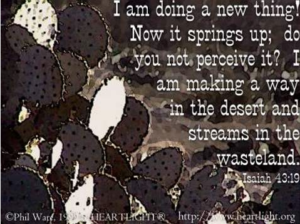
Do not be afraid when we stand at the edge of our Red Sea. Stand still in the peace of God and watch what the Lord does for you by destroying the enemy. The Lord is a warrior; the Lord is His name. Do not fear them, for the Lord your God is the One fighting for you. The Lord will fight for you while you only need to keep silent and remain calm. (Exodus 15:3; Deuteronomy 3:22; Exodus 14:14) Then he said to me, … “‘Not by might, nor by power, but by My Spirit,’ says the Lord of hosts. (Zechariah 4:6)

It is up to us whether we believe these verses and walk in the light of these verses. My focus this year is learning to practice the Presence of the Lord, being conscious of His Presence throughout my day.   And how do I do this?

Our Sovereign Lord is always doing a new thing. I pray that He will open the eyes of our minds and hearts so that we can see the many possibilities He has placed along our path. Protect us from following into such a routine way of living that we see only the same old things – missing the newness of Him. He always makes a way when there appears to be no way because all things are possible with Him.  (Matthew 19:26)

He has deposited a treasure within in me, within each one of His children – His very nature. We belong to God (2 Timothy 2:14; 1 Corinthians 3:16; 6:196).  We are more precious than outer space and all the galleries in the heavens above including all the angels and the seraphim (Psalm 139: 13-16; John 3:16). We are the apple of His eye (Deuteronomy 32:10; Psalm 17:8; Zechariah 2:8). I want to know Him in the power of His resurrection and the fellowship of His suffering and be made conformable unto His death (Philippians 3:10). I want to know and see the beauty and the wonder that is Him (Psalm 27:4; Isaiah 33:17).

When I focus in anticipation about what lies ahead of me, I am prone to rehearse my troubles repeatedly in my mind causing me to experience painful problems many times. The difficulties that God only intends for me to undergo once – when they actually happen. Only as I walk in His Presence, I stop multiplying my suffering in this way.

God has given me freedom, the freedom to choose my focus. As I consciously walk in His Presence, I am strengthened and prepared for my day. I am enabled to transform my fear into confident trust. I can stop my mind from wandering and come back into His Presence. My anxious thoughts shrink and fade away in His Light. His unconditional Love unmasks judgmental thoughts. Confused thoughts are untangled while I rest in the simplicity of His Peace.


Demolish Strongholds – TODAY!

In my last post, I encouraged you to identify any strongholds you may have. And then to ask the Holy Spirit to guide you to determine the root cause asking the question, “why did I find it necessary to build this fortress?”

Armed with this information, it is time to create a strategy to demolish that stronghold and be set free! Jesus Christ came to set us free from fear, shame, and guilt. God’s first command in Genesis 2:16 to man was to eat freely from all I have provided you. I wonder if we focus so much on the “thou shalt not” in Scripture we miss the beautiful words of love, “eat freely from My provision”?

In Psalm 18: 34-45, David provides us with many clues to help us engage the enemy – the fortress we have built. Within this passage, we find teaching both sides of truth: my responsibility to demolish and God’s promise of demolition!

What was David’s battle plan?

He trains my hands for war so that my arms can bend a bow of bronze. You have also given me the shield of Your salvation, And Your right hand upholds and sustains me; Your gentleness, Your gracious response, when I pray, makes me great.  You enlarge the path beneath me and make my steps secure so that my feet will not slip. I pursued my enemies and overtook them; I did not turn back until they were consumed. I shattered them so they could not rise; they fell, wounded under my feet. For You have encircled me with strength for the battle; You have subdued under me those who rose up against me. You have also made my enemies turn their backs to me in defeat, and I silenced and destroyed those who hated me. They cried for help, but there was no one to save them.  They cried even to the Lord, but He did not answer them. Then I beat them fine as the dust before the wind; I emptied them out as the dirt of the streets. You have rescued me from the contentions of the people; You have placed me as the head of the nations; a people whom I have not known serve me. As soon as they hear me, they respond and obey me; foreigners feign obedience to me. Foreigners lose heart and come trembling out of their strongholds. (my paraphrase)

 David’s strategy to destroy his strongholds guarantees victory! Here is what I learned from David’s plan. I am sure there are other insights you can see as you read this passage; please share those in the comments.

David says that God trains his hands for war. Are you in training? Are you willing to take the time to do the work of training your mind in warfare?

Scripture has many references to being a soldier in the Lord’s army. There are many great books about the training of men to secure their place as a member of the Roman army. One of my favorite books is written by Rick Renner, ‘Dressed to Kill, A Biblical Approach to Spiritual Warfare and Armor.’

From this book, here is some background information about the training of the Roman soldier, which will help us understand what David means by training his hands for war.

What was a soldier’s function in Roman times?

First and foremost, it was to be in the practice of warring, fighting, killing, and conquering. In addition, a soldier’s function also referred to the intense training required of every Roman soldier, including constant drills, military exercises, and deliberately imposed hardships.

The training regimen for recruits in the Roman army included marching, leaping, swimming, sword practice, drills, and other forms of military exercises. All of these exercises were essential. Only after the recruits proved their worthiness through this period of training – not only in physical and mental endurance but also in courage – did they receive “the military mark,” a permanent mark branded with a hot iron on every soldier’s hand – possibly an eagle or a symbol of the soldier’s legion or unit.

Why would swimming be a necessary skill for any soldier? In pursuing an army, the soldier is often duty-bound to swim through the rivers, as there are no bridges to pass over to the other side.

Swimming across otherwise impassable rivers takes determination and sheer courage! It is a picture of “enduring hardness” and doing whatever it takes to get the job done.  Every young soldier, without exception, was taught to swim, telling us that these skills do not come naturally to most of us. We must be instructed and trained in the ways of warfare if we want to succeed in battle. Are you willing?

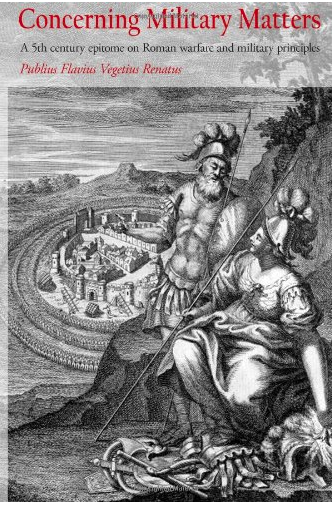
Concerning military training, Flavius Vegetius Renatus wrote in his book Concerning Military Manners (late 4th Century AD), “We find that the Romans owed the conquest of the world to no other cause than continual military training, exact observance of discipline in the camps, and unwearied cultivation of other arts of war. They thoroughly understood the importance of hardening their recruits by continual practice and training them to every maneuver in line and action. Nor were they less strict in punishing idleness and slothfulness.” You may be thinking that a great deal was expected of their soldiers, and you are correct…. this is precisely the point! The commanders’ high expectations and intense training of their troops laid the foundation for future victory.

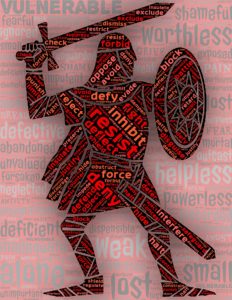
Like the Roman soldiers, you must endure hardship (trials, suffering) through continual practice and training in every possible maneuver against the enemy.

You, therefore, must endure hardship as a good soldier of Jesus Christ. No one engaged in warfare entangles himself with the affairs of this life that he may please him who enlisted him as a soldier. (2 Timothy 2:3-4)

Because the Roman army was so committed to warfare, Roman soldiers continually practiced combat arts. One primary daily exercise was sword practice, which the soldiers engaged in both in the morning and afternoon. The various pieces of weaponry were very, very heavy. Some scholars estimate that the weight of the armor was up towards 44 pounds plus a backpack carrying his rations and any tools needed to serve the Roman officers. Imagine how physically fit Roman soldiers had to be to carry his equipment.

Are you fit to fight the battle?

If you want to walk in the whole armor of God and function effectively on the battlefield, you must be spiritually fit.

Looking back at Psalm 18:34-45, notice that David not only trains, but he prays. As a result, what did he experience? Listen to how David describes his victory

I pursued my enemies and overtook them; I did not turn back until they were consumed. I shattered them so that they could not rise; I silenced and destroyed those who hated me. Then I beat them fine as the dust before the wind; I emptied them out as the dirt of the streets.

WOW!!! I do believe David demolished his enemy! And we, too, can experience the same victory.

We can silence those voices we hear in our head; those voices that want to control us by taking the easy way out – to submit to them.



It is also essential to recognize God’s promises to His soldiers – or what will God do for us if we are willing to train and fight the battle? From the same passage (Psalm 18: 34-45), look at God’s promises to David as he wages war against the enemy.

1. God provides me with His weapons to fight the battle.

2. He answers my prayers to help me fight the battle, by upholding and sustaining me through the battle.

3. As I take each step, fight each battle, God makes my steps secure – I am ensured of being victorious.

4. Fighting the battle, empowered by the Holy Spirit, my enemy is defeated. God silences those voices in my head, the habits, the behaviors that desire to dominate me.

5. He rescues me from the arguments, human reasoning, high and lofty imaginations in my mind. They cry out to God for help to maintain their position, but He does not hear them.

6. As soon as my strongholds hear the Word of God, quoting Scripture, singing praise and worship songs, they lose heart, and they give up the fight. We experience the victory – not the agony of defeat!

Our responsibility is to fully and regularly immerse ourselves in all the disciplines accompanying warfare and undergo constant drills, military exercises, hardship, and training.

What are those training exercises that help build up our inner being and better equip us for warfare?

Here are just a few examples.

  • Regularly attend services where the Word is taught and preached by the anointing of the Holy Spirit – in person or online.
  • Listen to, as well as read, resources that will develop you spiritually.
  • Daily engage in scriptural, spiritual warfare by recognizing when you are making allowances for the flesh.
  • Study and stand on the Word; apply what the Lord teaches you.
  • Participate in small group Bible studies helping you to connect and bond with like-minded believers.
  • Cultivate a deeper intimacy with the Lord in your prayer, and devotional time through journaling.

As the new year, 2022, launches,  ask yourself: What new strategies do I need to implement to demolish the strongholds that are holding me back from experiencing all that God desires that I experience – abundant, overflowing joy, new opportunities, new possibilities, the life I want to live?

Do not hesitate – identify those thoughts and mannerisms that are holding you hostage. God warns us that if we do not identify them and demolish them, they will grow stronger, causing us to miss the opportunities and experiences that He desires for us.

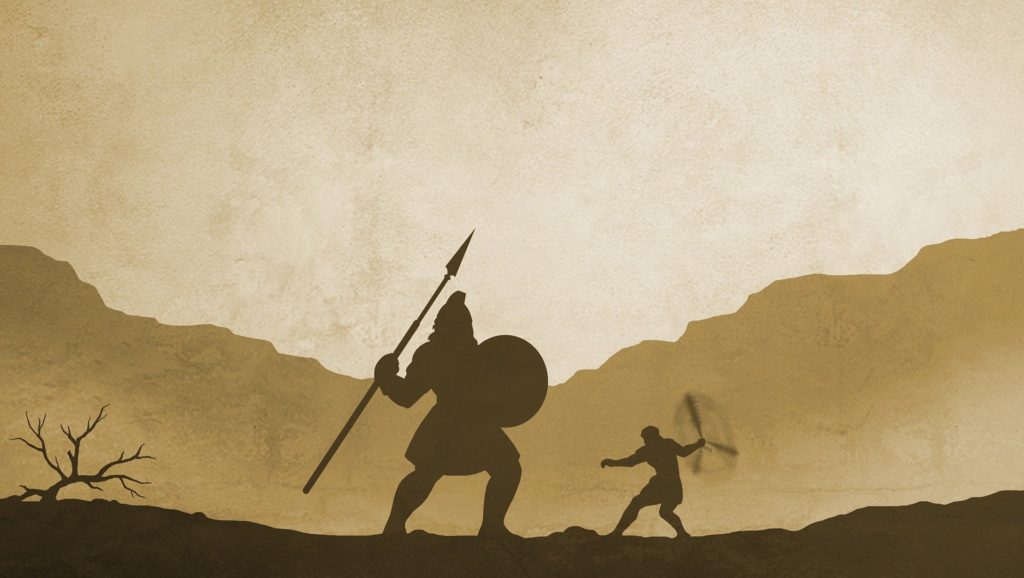
I love the story of David and Goliath – the Philistine giant that the army of Israel feared and refused to fight. (1 Samuel 17) The Word describes Israel’s reaction this way:  the men of Israel all saw the man (Goliath); they fled from him and were very frightened. (v. 24) They were willing to give Goliath all he wanted – all the ground God had given them in the Promised Land. Goliath was around 9’10” tall, and Bible scholars estimate that the helmet he wore weighed around 100 pounds! The iron spearhead weighed approximately 12 pounds. You have probably never faced a human matching Goliath’s description, but I am sure that we can identify with one another that sometimes it seems that our ‘giants’ are built like Goliath! But this did not stop David.

Then David said to Goliath, the Philistine, You come to me with a sword, a spear, and a javelin, but I come to you in the name of the Lord of hosts, the God of the armies of Israel, whom you have taunted. This day the Lord will hand you over to me, and I will strike you down and cut off your head. (v. 45) David triumphed over the Philistine with a sling and a stone, and he struck down the Philistine and killed him, but there was no sword in David’s hand. So he ran and stood over the Philistine, grasped his sword and drew it out of its sheath and killed him, and cut off his head with it. When the Philistines saw that their mighty champion was dead, they fled.  (v. 50-51)

 Not only must we identify our enemy, the stronghold, the giants we allow to roam through our thoughts, securing their ground, but we must also visualize victory. The victory is already won – choose to walk in victory.

For the LORD your God is the one who goes with you to fight for you against your enemies to give you victory. (Deuteronomy 20:4)

But thanks be to God! He gives us the victory through our Lord Jesus Christ. (1 Corinthians 15:57)

What does a victory feel like – look like?

For me, I envision myself crossing the finish line wearing garments of praise.

 

For those deeply embedded strongholds, I visualize myself holding the sword of the Spirit,

which is symbolic of the Word of God, and literally chopping off the head of the stronghold – severing it forever from my thoughts!


Rather than trusting in your own created strongholds, choose God as your stronghold, your fortress – the One where you can take shelter from the pain, storm, hurt.

The Lord is good, a stronghold in the day of trouble; he knows those who take refuge in him. Nahum 1:7

The Lord is a stronghold for the oppressed, a stronghold in times of trouble. Psalm 9:9

The Lord is my rock and my fortress and my deliverer, my God, my rock, in whom I take refuge, my shield, and the horn of my salvation, my stronghold. Psalm 18:2