When God Provides: Finding Hope and Creativity in the Midst of Plumbing Problems

Have you ever found yourself in a situation where you feel stuck and unable to move forward? Maybe you’ve been feeling this way for a while, and it seems like nothing is working out for you. Perhaps you’ve accepted lies about yourself or convinced yourself that things would never change. But I want to encourage you today that there is hope and that things can turn around.

Recently, I experienced a situation where I turned on the water faucet, but there was no water. I thought I had fixed the issue, but nothing seemed to work. However, instead of giving up and accepting the situation, I decided to be creative and find solutions. It wasn’t easy, but with faith and perseverance, we overcame the challenge.

We were without water to the house for one week, but God provided us with nice weather and enough containers to fill with water directly from the well. It was a time of testing and being creative in finding solutions as each new challenge confronted us.

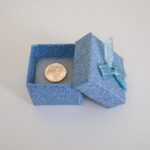
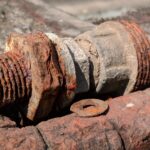
When repaired, the plumber showed me the problem – a clogged pipe. When you hold it up to the light, you only see 2 very small pen holes which supplied water to the entire house. And I was always told we have low water pressure because our system is old.

The clogged pipe on my kitchen counter is a powerful reminder of the consequences of accepting situations.


For years, I convinced myself that our low water pressure was just a fact of life. I adapted to it, making small adjustments here and there to accommodate the limitations of our plumbing. But in doing so, I was shutting down the flow of energy, power, love, and transformation in my home.

Life is full of unexpected twists and turns; sometimes, things don’t go as planned. Sometimes, we adapt to our circumstances and adjust to accommodate our limitations. But in doing so, we can shut down the possibility of God’s blessings and provision in our lives. We must remember that we serve a God who is a way-maker and can make a way where there seems to be no way.



It’s easy to get discouraged and lose hope when we face difficulties, but we must trust that God has a plan and a purpose for our lives. If you’re facing a situation in your life that you know isn’t healthy or sustainable, it’s time to take action. Don’t settle for less than God’s best in your life. Pray for wisdom and discernment to know what steps to take, and have faith that God will provide for your every need.

Take a moment to reflect on the promises of God.

He promises to give us hope and a future (Jeremiah 29:11), to work all things together for our good (Romans 8:28), and to never leave us nor forsake us (Hebrews 13:5). These promises are not just words on a page; they are truths that we can hold onto and believe.

It’s never too late to make a change in your life.

Don’t let fear or complacency hold you back from experiencing the abundant life that Christ promises. Step out in faith, and trust that God will guide you every step of the way.

So, my friend, don’t give up hope. Keep pressing forward.

Trust that God has a plan for your life. He can make a way where there seems to be no way and provide for your every need. Be creative, stay positive, and believe that better days are ahead.

Remember, you are loved, valued, and capable of achieving your dreams. Keep pressing forward, and don’t give up hope. God has a plan and a purpose for your life, and He will work all things together for your good (Romans 8:28-29).

With love and encouragement,
Neva

David’s Evening Walk

Yesterday my son, David, and I had planned to clear the way to a fallen tree in our back acreage, preparing for next fall’s wood supply, but instead, we changed our plans due to the falling snow we have been experiencing all week.

 

Last week beautiful Pacific Northwest spring weather –




This week return to winter.

This morning I found this email about his evening walk. So beautifully expressed as Sunday, we celebrate our Lord’s Resurrection. I hope you will be inspired to stop, remember, and look at God’s glorious creation! If we remain in His Presence, He will always reveal Himself to us.

We must have our spiritual eyes, ears, and heart ready to receive!


David wrote:

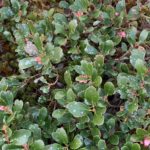
This one is the American Winterberry.

It reminds me of a lowly, humble plant growing on the forest floor with berries. Notice the tear stains on the leaves; berries now pink will turn red like sweat drops of blood. This plant is easy to miss unless you have the eyes to see it.

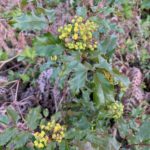
This one is the Oregon Grape.

It reminds me of a golden crown of thorns.

The golden berries soon turn royal purple.


The Avalanche Lilly with six white petals represents the day man was created with a center crown of gold, a promise from our risen LORD to them that love Him. “Jesus was God and man in one person, that God and man might be happy together again.”—-George Whitfield
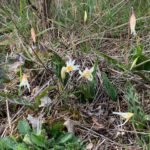
The Avalanche Lilly reminds me of being closest to the sun, which will cast a shadow no matter which cloud you are in.

Psalm 91:1 “He that dwelleth in the secret place of the most high, shall abide under the shadow of the most high.”


Enter into His Presence


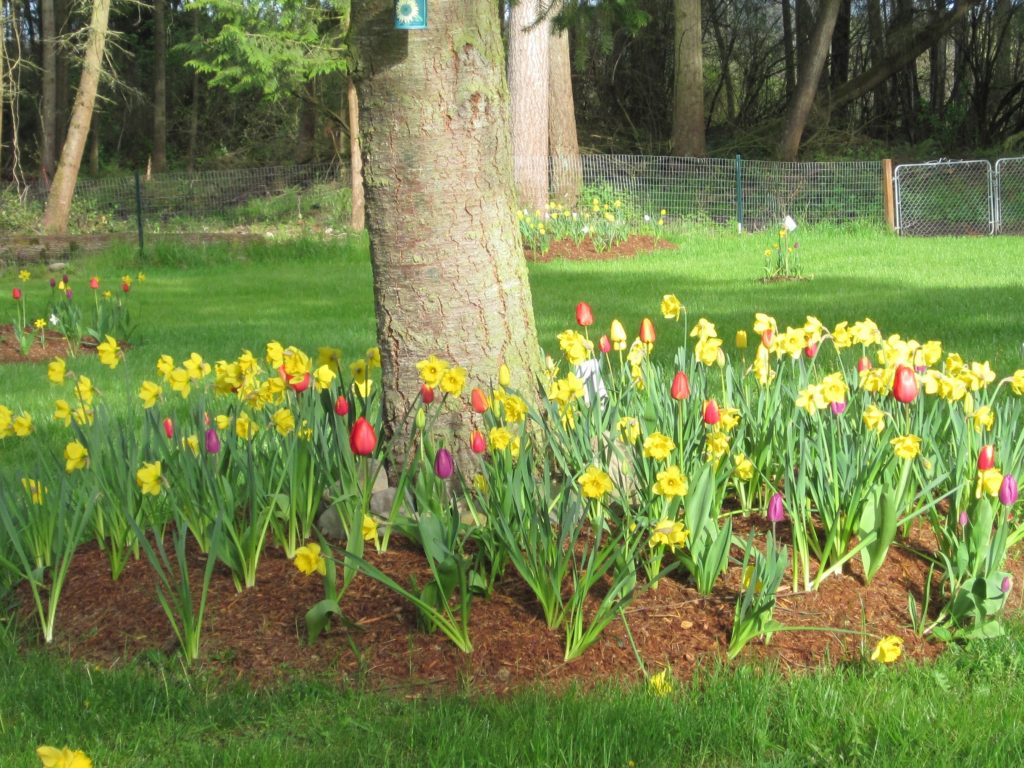
My daffodils are almost gone  – ready to go asleep for another year! I do love the beauty of spring. Yes, even the spring rains! Suddenly (so it seems), you see flowers popping up their heads from their winter rest, and then WOW, their colors burst forth!

Seemingly overnight, I see this happening year after year with my forsythia bush from my kitchen window. And so beautiful when it is full of its rich, yellow blossoms screaming –



With spring and its  beauty also comes the time when we pause  and celebrate our Lord’s death, burial, and resurrection – Easter.

When my children were younger and then with my granddaughters, I remember gathering together for this special day. Yes, we colored Easter eggs and hunted for them in the yard or house, depending on the weather, followed by a delicious family dinner.

Before enjoying our delicious ham dinner, we walked through our Savior’s last week on this earth using a set of Resurrection Eggs.  Each of us opened our egg and retold a portion of His journey during that week.  So many wonderful and glorious memories!

My theme for 2022 is Living in the Radiance Presence of the Lord. I have thought a lot about what it means for me as I walk the road of Alzheimer’s with my husband. The parable of the old and new wineskins has been incredibly insightful for this journey.

“No one puts new wine into old wineskins that have lost their elasticity; otherwise, the wineskins burst, and the fermenting wine spills, and the wineskins are ruined. But new wine is put into fresh wineskins, so both are preserved.” (Matthew 9:17)  

How does this translate into living in the radiant presence of the Lord?

What does it have to do with the arrival of spring?


As my husband forgets old skills and routines, I need to learn new skills and new ways. To accomplish this task, I choose not to force the old of yesterday into the new of today. I will not force today into yesterday’s mold.


I am often guilty of bringing the difficulties of yesterday into the newness of today, forgetting that God makes all things new – including today!


 

Forcing the old of yesterday into the newness of today causes me to limp through my day and I have accomplished exactly what Jesus said would happen if we put new wine in old wineskins – both are destroyed and lost.

Application:

Both the lessons of yesterday and today’s new and unique opportunities and discoveries are wasted.


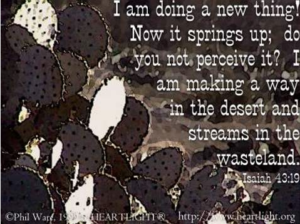
“Do not remember the former things or ponder the things of the past. “Listen carefully; I am about to do a new thing; now it will spring forth; Will you not be aware of it? I will even put a road in the wilderness, rivers in the desert. Isaiah 43:18-19


Because of the Lord’s loving kindnesses, we are not consumed, Because His tender compassions never fail. They are new every morning; Great and beyond measure is Your faithfulness. “The Lord is my portion and my inheritance,” says my soul; “Therefore, I have hope in Him and wait expectantly for Him.” Lamentations 3:22-24

I am currently reading books by A. W. Tozer. In his timeless writing In Pursuit of God, he gives this fantastic picture journey of the blessing and joy of our Easter celebration resulting in a daily celebration we have the opportunity to experience.

The interior journey of the soul from the wilds of sin into the enjoyed Presence of God is beautifully illustrated in the Old Testament tabernacle. The returning sinner first entered the outer court, where he offered a blood sacrifice on the brazen altar and washed in the laver that stood near it. Then he passed through a veil into the holy place where no natural light could come, but the golden candlestick spoke of Jesus, the Light of the World streaming its soft glow. There also was the shewbread to tell of Jesus, the Bread of Life, and the altar of incense, a figure of unceasing prayer.

            Though the worshiper had enjoyed so much, still he had not yet entered the presence of God. Another veil separated from the Holy of Holies where above the mercy seat dwelt the very God Himself in frightening and glorious manifestation. While the tabernacle stood, only the high priest could enter there, and that but once a year, with blood which he offered for his sins and sins of the people. It was this last veil that was rent when our Lord gave up His spirit on Calvary (John 19:30), and the sacred writer explains that this rending of the veil opened the way for every worshiper in the world to come by the new and living way straight into the divine Presence. (Matthew 27:51; Hebrews 10:19-23)

            Everything in the New Testament accords with this Old Testament picture. Ransomed men need no longer pause in fear to enter the Holy of Holies. God wills that we should push on into His presence and live our whole life there. This is to be known to us in conscious experience. It is more than a doctrine to be held; it is a life to be enjoyed every moment of every day.

             To enter the Presence is a spiritual experience, to become suddenly aware that we are in God and God is in us. God is Spirit, and only the spirit of a man can know Him. In the deep spirit of man, the fire must glow, or our love is not the true love of God.”


Joyous Resurrection Day!

Are You Living in the Presence of the Lord?


This year I am reading through the Bible, chronologically, fulfilling a long-time desire.  Using a read through the Bible chronologically makes it much easier to do – reading for the day is altogether no matter where it is found in our Bibles!

It has been good to do this because as I become familiar with passages of Scripture, I sometimes find myself reading words – not thinking about anything I am reading – just completing the assignment for the day! Changing how I do things helps me be alert and pay closer attention to what I am reading.

The other day I was reading Exodus 13, where the children of Israel are in the wilderness on their way to the Promised Land. They are approaching the Red Sea after their release from slavery – 400 years of bondage to the Egyptian monarchy. For a moment, stop and consider what that must have been like for them. So many generations before them were born as enslaved people and died as enslaved people! But now they are free – freed by their God Jehovah!

As they begin their journey to the Promised Land, they are told repeatedly to remember this day – to remember how they were delivered from the enemy: “ by the strength of the LORD’S hand.”  God gives them a little information about where they are headed – a land of the Canaanites, Hittites, Amorites, Hivites, and the Jebusites, a land promised to their fathers flowing with milk and honey. Notice the contrast: a flourishing land that will meet their physical needs, but also a land full of their enemies!

God continues to tell His children that He will be with them – day and night. They will know that He is Present in the pillar of cloud by day

and at night when the cloud would have the appearance of fire. They can see His Presence at all times. He also tells them that He will fight the upcoming battle at the Red Sea for them; they, however, were to stand still and hold their peace as they stood on the banks of the Red Sea,

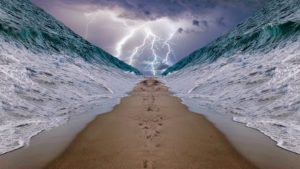
There is disagreement about where the children of Israel crossed, so it is impossible to determine the depth and width at the crossing. But what can we learn from Scripture? The following information is from an article from whatsaiththeScriptures.org.

When the Jews left Egypt after Passover and during Unleavened Bread, it was nighttime. God told Israel that He would kill Egypt’s firstborn at “midnight” (Exodus 12:29). In the night, Pharaoh tells Moses and Aaron, shortly after the firstborn were slain, that Israel should leave Egypt (verse 31). And on that very same day, the Lord brought the sons of Israel out of the land of Egypt according to their multitudes (verse 51).

Exodus 14:24 tells us that by “the morning watch” (“the last portion of the night”), the Egyptian armies are still trying to reach the Red Sea and attack Israel. By the “morning,” the sea had returned to its normal state and covered the Egyptian armies. The waters went back instantly as God held them back. God’s miracles occur in an instant. (Matthew 8:3; Mark 1:32; Mark 10:52; Luke 4:39; Luke 18:43; John 5:9; Acts 9:18), Evidently, it took several hours for all Jews to cross the Red Sea. During this period of hours, God sustained the walls of water.

We do not know how many Jews walked side-by-side across the Red Sea, but we can conclude that the Red Sea’s opening and closing happened within the time of one night and thus not days. Exodus 12:29 (“midnight,” Israel told to leave Egypt) and Exodus 14:27 (“morning appeared,” the Red Sea covered the Egyptians) would give us an estimation of fewer than six hours for the Jews to enter the Red Sea and safely pass through to the other shore.

Put yourself in the sandals of the Israelites ….


What had they experienced, what did they know, and what was promised them?

  • They were free from the cruelty of slavery – no longer in prison.
  • They were released by the Lord – the strength of His hand and instructed not to forget!
  • They were going to the Promised Land – a land that Abraham, Isaac, and Jacob had been promised as a possession. But this land was not one they were familiar with – none of them had traveled there before. None of them had ever been free to travel anywhere!
  • This land flourished with meat and produce but was also occupied by other nations – God’s enemies.
  • They were told that they could see the Presence of Jehovah – He would always be there with them – all they had to do was look up.
  • God did not lead them the shortest route to the Promised Land; instead, He took them into the wilderness of the Red Sea. I wonder how many of them were familiar with the Red Sea. And why did God do this? “Lest perhaps the people change their minds when they see war and return to Egypt.” They were in an army, God’s army. But they were not trained as soldiers; they were trained as slaves!
  • When they arrived at the Red Sea, they were “not to be afraid; they were to stand still and see the salvation of the LORD which He will accomplish for you today. For the Egyptians whom you see today, you shall see again no more forever. The LORD will fight for you, and you shall hold your peace.”

I don’t know about you, but I am afraid that I would have been one of those Israelites that would have questioned Moses and the LORD.

“I am free but going to a land filled with other cruel nations like I just left. I have to travel through the wilderness rather than take the short route to this enemy-filled land. And what about the Red Sea? I have to cross it as the Egyptians are coming after me to kill me. But I don’t swim! HELP! How can I escape certain death – water before me and Egyptians behind me.”





As I continued to read, I thought about how this situation for Israel is no different from what you and I face every day.

We have been freed from the cruelty of slavery – no longer in prison. We know that our old self [our human nature without the Holy Spirit] was nailed to the cross with Him so that our body of sin might be done away with so that we would no longer be slaves to sin. For the person who has died with Christ has been freed from the power of sin. (Romans 6: 6-7)

We have been released by the strength of His hand: For the death that He died, He died to sin, ending its power and paying the sinner’s debt once and for all. The life that He lives, He lives to glorify God in unbroken fellowship with Him. Even so, consider yourselves to be dead to sin and your relationship to it broken, but alive to God in unbroken fellowship with Him in Christ Jesus. For sin will no longer be a master over you, since you are not under Law as enslaved people, but under unmerited grace as recipients of God’s favor and mercy. (Romans 6: 10-11, 14)

We are on our way to the Promised Land – heaven. But for now, we live in a land that God’s enemies occupy. But this land is not one we are familiar with – we have not traveled here before. But we are different because our citizenship is in heaven. Therefore, we do not lose heart … for our momentary, light affliction is producing for us an eternal weight of glory far beyond all comparison,  while we look not at the things which are seen, but at the things which are not seen; for the things which are seen are temporal, but the things which are not seen are eternal.  I have told you these things so that in Me you may have perfect peace. You will have tribulation and distress and suffering in the world, but be courageous, confident, undaunted, and filled with joy; I have overcome the world. My conquest is accomplished My victory abiding. (Philippians 3:20; 2 Corinthians 4: 16-17; John 16:33)

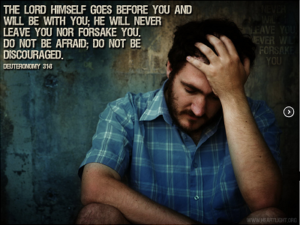
God is always with us on our daily faith journey.  He has said, “I will never under any circumstances, desert you nor give you up nor leave you without support, nor will I in any degree leave you helpless, nor will I forsake or let you down or relax My hold on you – assuredly not!” Be strong and courageous, do not be afraid or in dread of them, for the Lord your God is the One who is going with you. He will not desert you or abandon you. And the Lord is the one who is going ahead of you; He will be with you. He will not desert you or abandon you. Do not fear, and do not be dismayed.” (Hebrews 13:5; Deuteronomy 31: 6,8)

We are in God’s army. He may not take us the shortest route over our mountain, but we can know He will enable us if we must climb up cliffs.

Share in suffering as a good soldier of Christ Jesus. No soldier gets entangled in civilian pursuits since his aim is to please the one who enlisted himPut on the whole armor of God, that you may be able to stand against the schemes of the devil. (2 Timothy 2: 3-4; Ephesians 6:1)
 

I will ask the Father, and He will give you another Helper, a Comforter, Advocate, Intercessor, Counselor, Strengthener, Standby, to be with you forever. I will not leave you as orphans comfortless, bereaved, and helpless; I will come back to you. (John 14:16, 18)
Do not be afraid when we stand at the edge of our Red Sea. Stand still in the peace of God and watch what the Lord does for you by destroying the enemy. The Lord is a warrior; the Lord is His name. Do not fear them, for the Lord your God is the One fighting for you. The Lord will fight for you while you only need to keep silent and remain calm. (Exodus 15:3; Deuteronomy 3:22; Exodus 14:14) Then he said to me, … “‘Not by might, nor by power, but by My Spirit,’ says the Lord of hosts. (Zechariah 4:6)

It is up to us whether we believe these verses and walk in the light of these verses. My focus this year is learning to practice the Presence of the Lord, being conscious of His Presence throughout my day.   And how do I do this?

Our Sovereign Lord is always doing a new thing. I pray that He will open the eyes of our minds and hearts so that we can see the many possibilities He has placed along our path. Protect us from following into such a routine way of living that we see only the same old things – missing the newness of Him. He always makes a way when there appears to be no way because all things are possible with Him.  (Matthew 19:26)

He has deposited a treasure within in me, within each one of His children – His very nature. We belong to God (2 Timothy 2:14; 1 Corinthians 3:16; 6:196).  We are more precious than outer space and all the galleries in the heavens above including all the angels and the seraphim (Psalm 139: 13-16; John 3:16). We are the apple of His eye (Deuteronomy 32:10; Psalm 17:8; Zechariah 2:8). I want to know Him in the power of His resurrection and the fellowship of His suffering and be made conformable unto His death (Philippians 3:10). I want to know and see the beauty and the wonder that is Him (Psalm 27:4; Isaiah 33:17).

When I focus in anticipation about what lies ahead of me, I am prone to rehearse my troubles repeatedly in my mind causing me to experience painful problems many times. The difficulties that God only intends for me to undergo once – when they actually happen. Only as I walk in His Presence, I stop multiplying my suffering in this way.

God has given me freedom, the freedom to choose my focus. As I consciously walk in His Presence, I am strengthened and prepared for my day. I am enabled to transform my fear into confident trust. I can stop my mind from wandering and come back into His Presence. My anxious thoughts shrink and fade away in His Light. His unconditional Love unmasks judgmental thoughts. Confused thoughts are untangled while I rest in the simplicity of His Peace.


Demolish Strongholds – TODAY!

In my last post, I encouraged you to identify any strongholds you may have. And then to ask the Holy Spirit to guide you to determine the root cause asking the question, “why did I find it necessary to build this fortress?”

Armed with this information, it is time to create a strategy to demolish that stronghold and be set free! Jesus Christ came to set us free from fear, shame, and guilt. God’s first command in Genesis 2:16 to man was to eat freely from all I have provided you. I wonder if we focus so much on the “thou shalt not” in Scripture we miss the beautiful words of love, “eat freely from My provision”?

In Psalm 18: 34-45, David provides us with many clues to help us engage the enemy – the fortress we have built. Within this passage, we find teaching both sides of truth: my responsibility to demolish and God’s promise of demolition!

What was David’s battle plan?

He trains my hands for war so that my arms can bend a bow of bronze. You have also given me the shield of Your salvation, And Your right hand upholds and sustains me; Your gentleness, Your gracious response, when I pray, makes me great.  You enlarge the path beneath me and make my steps secure so that my feet will not slip. I pursued my enemies and overtook them; I did not turn back until they were consumed. I shattered them so they could not rise; they fell, wounded under my feet. For You have encircled me with strength for the battle; You have subdued under me those who rose up against me. You have also made my enemies turn their backs to me in defeat, and I silenced and destroyed those who hated me. They cried for help, but there was no one to save them.  They cried even to the Lord, but He did not answer them. Then I beat them fine as the dust before the wind; I emptied them out as the dirt of the streets. You have rescued me from the contentions of the people; You have placed me as the head of the nations; a people whom I have not known serve me. As soon as they hear me, they respond and obey me; foreigners feign obedience to me. Foreigners lose heart and come trembling out of their strongholds. (my paraphrase)

 David’s strategy to destroy his strongholds guarantees victory! Here is what I learned from David’s plan. I am sure there are other insights you can see as you read this passage; please share those in the comments.

David says that God trains his hands for war. Are you in training? Are you willing to take the time to do the work of training your mind in warfare?

Scripture has many references to being a soldier in the Lord’s army. There are many great books about the training of men to secure their place as a member of the Roman army. One of my favorite books is written by Rick Renner, ‘Dressed to Kill, A Biblical Approach to Spiritual Warfare and Armor.’

From this book, here is some background information about the training of the Roman soldier, which will help us understand what David means by training his hands for war.

What was a soldier’s function in Roman times?

First and foremost, it was to be in the practice of warring, fighting, killing, and conquering. In addition, a soldier’s function also referred to the intense training required of every Roman soldier, including constant drills, military exercises, and deliberately imposed hardships.

The training regimen for recruits in the Roman army included marching, leaping, swimming, sword practice, drills, and other forms of military exercises. All of these exercises were essential. Only after the recruits proved their worthiness through this period of training – not only in physical and mental endurance but also in courage – did they receive “the military mark,” a permanent mark branded with a hot iron on every soldier’s hand – possibly an eagle or a symbol of the soldier’s legion or unit.

Why would swimming be a necessary skill for any soldier? In pursuing an army, the soldier is often duty-bound to swim through the rivers, as there are no bridges to pass over to the other side.

Swimming across otherwise impassable rivers takes determination and sheer courage! It is a picture of “enduring hardness” and doing whatever it takes to get the job done.  Every young soldier, without exception, was taught to swim, telling us that these skills do not come naturally to most of us. We must be instructed and trained in the ways of warfare if we want to succeed in battle. Are you willing?

Concerning military training, Flavius Vegetius Renatus wrote in his book Concerning Military Manners (late 4th Century AD), “We find that the Romans owed the conquest of the world to no other cause than continual military training, exact observance of discipline in the camps, and unwearied cultivation of other arts of war. They thoroughly understood the importance of hardening their recruits by continual practice and training them to every maneuver in line and action. Nor were they less strict in punishing idleness and slothfulness.” You may be thinking that a great deal was expected of their soldiers, and you are correct…. this is precisely the point! The commanders’ high expectations and intense training of their troops laid the foundation for future victory.

Like the Roman soldiers, you must endure hardship (trials, suffering) through continual practice and training in every possible maneuver against the enemy.

You, therefore, must endure hardship as a good soldier of Jesus Christ. No one engaged in warfare entangles himself with the affairs of this life that he may please him who enlisted him as a soldier. (2 Timothy 2:3-4)

Because the Roman army was so committed to warfare, Roman soldiers continually practiced combat arts. One primary daily exercise was sword practice, which the soldiers engaged in both in the morning and afternoon. The various pieces of weaponry were very, very heavy. Some scholars estimate that the weight of the armor was up towards 44 pounds plus a backpack carrying his rations and any tools needed to serve the Roman officers. Imagine how physically fit Roman soldiers had to be to carry his equipment.

Are you fit to fight the battle?

If you want to walk in the whole armor of God and function effectively on the battlefield, you must be spiritually fit.

Looking back at Psalm 18:34-45, notice that David not only trains, but he prays. As a result, what did he experience? Listen to how David describes his victory

I pursued my enemies and overtook them; I did not turn back until they were consumed. I shattered them so that they could not rise; I silenced and destroyed those who hated me. Then I beat them fine as the dust before the wind; I emptied them out as the dirt of the streets.

WOW!!! I do believe David demolished his enemy! And we, too, can experience the same victory.

We can silence those voices we hear in our head; those voices that want to control us by taking the easy way out – to submit to them.


It is also essential to recognize God’s promises to His soldiers – or what will God do for us if we are willing to train and fight the battle? From the same passage (Psalm 18: 34-45), look at God’s promises to David as he wages war against the enemy.

1. God provides me with His weapons to fight the battle.

2. He answers my prayers to help me fight the battle, by upholding and sustaining me through the battle.

3. As I take each step, fight each battle, God makes my steps secure – I am ensured of being victorious.

4. Fighting the battle, empowered by the Holy Spirit, my enemy is defeated. God silences those voices in my head, the habits, the behaviors that desire to dominate me.

5. He rescues me from the arguments, human reasoning, high and lofty imaginations in my mind. They cry out to God for help to maintain their position, but He does not hear them.

6. As soon as my strongholds hear the Word of God, quoting Scripture, singing praise and worship songs, they lose heart, and they give up the fight. We experience the victory – not the agony of defeat!

Our responsibility is to fully and regularly immerse ourselves in all the disciplines accompanying warfare and undergo constant drills, military exercises, hardship, and training.

What are those training exercises that help build up our inner being and better equip us for warfare?

Here are just a few examples.

  • Regularly attend services where the Word is taught and preached by the anointing of the Holy Spirit – in person or online.
  • Listen to, as well as read, resources that will develop you spiritually.
  • Daily engage in scriptural, spiritual warfare by recognizing when you are making allowances for the flesh.
  • Study and stand on the Word; apply what the Lord teaches you.
  • Participate in small group Bible studies helping you to connect and bond with like-minded believers.
  • Cultivate a deeper intimacy with the Lord in your prayer, and devotional time through journaling.

As the new year, 2022, launches,  ask yourself: What new strategies do I need to implement to demolish the strongholds that are holding me back from experiencing all that God desires that I experience – abundant, overflowing joy, new opportunities, new possibilities, the life I want to live?

Do not hesitate – identify those thoughts and mannerisms that are holding you hostage. God warns us that if we do not identify them and demolish them, they will grow stronger, causing us to miss the opportunities and experiences that He desires for us.

I love the story of David and Goliath – the Philistine giant that the army of Israel feared and refused to fight. (1 Samuel 17) The Word describes Israel’s reaction this way:  the men of Israel all saw the man (Goliath); they fled from him and were very frightened. (v. 24) They were willing to give Goliath all he wanted – all the ground God had given them in the Promised Land. Goliath was around 9’10” tall, and Bible scholars estimate that the helmet he wore weighed around 100 pounds! The iron spearhead weighed approximately 12 pounds. You have probably never faced a human matching Goliath’s description, but I am sure that we can identify with one another that sometimes it seems that our ‘giants’ are built like Goliath! But this did not stop David.

Then David said to Goliath, the Philistine, You come to me with a sword, a spear, and a javelin, but I come to you in the name of the Lord of hosts, the God of the armies of Israel, whom you have taunted. This day the Lord will hand you over to me, and I will strike you down and cut off your head. (v. 45) David triumphed over the Philistine with a sling and a stone, and he struck down the Philistine and killed him, but there was no sword in David’s hand. So he ran and stood over the Philistine, grasped his sword and drew it out of its sheath and killed him, and cut off his head with it. When the Philistines saw that their mighty champion was dead, they fled.  (v. 50-51)

 Not only must we identify our enemy, the stronghold, the giants we allow to roam through our thoughts, securing their ground, but we must also visualize victory. The victory is already won – choose to walk in victory.

For the LORD your God is the one who goes with you to fight for you against your enemies to give you victory. (Deuteronomy 20:4)

But thanks be to God! He gives us the victory through our Lord Jesus Christ. (1 Corinthians 15:57)

What does a victory feel like – look like?

For me, I envision myself crossing the finish line wearing garments of praise.


For those deeply embedded strongholds, I visualize myself holding the sword of the Spirit,

which is symbolic of the Word of God, and literally chopping off the head of the stronghold – severing it forever from my thoughts!


Rather than trusting in your own created strongholds, choose God as your stronghold, your fortress – the One where you can take shelter from the pain, storm, hurt.

The Lord is good, a stronghold in the day of trouble; he knows those who take refuge in him. Nahum 1:7

The Lord is a stronghold for the oppressed, a stronghold in times of trouble. Psalm 9:9

The Lord is my rock and my fortress and my deliverer, my God, my rock, in whom I take refuge, my shield, and the horn of my salvation, my stronghold. Psalm 18:2

Time to Demolish Strongholds!

What is a stronghold?

Time for a brief history lesson!

As populations of the earth multiplied and formed cities, people realized that living in the open left you vulnerable to nature and becoming a victim to others. Conquerors would attack unsuspecting or defenseless cities, taking goods and people. Citizens within the city learned that walls were needed for protection and a gate to control who came into the city.  The better the defense, the more secure the inhabitant.

A city with strong walls and a safe location, usually a hilltop or mountain, would grow in status and power, enriching its people. As the city prospered, it could then begin to control the surrounding towns and villages, which were less secure. An army could rest and relax between offensive campaigns within the walls of their city. Thus, their point of operation became a “strong hold.”

Scripture defines strongholds as a “sophisticated argument, a  high and proud thing that sets itself up against the true knowledge of God.” (2 Corinthians 10: 5)

A stronghold is a point of operation which weakens and even chokes the power of the Holy Spirit within believers. Thus the commands to not quench or grieve the Holy Spirit. (1  Thessalonians 5:19; Ephesians 4:30)

Do you have thought patterns that are faulty, erroneous that have molded themselves into your thinking, establishing a lifestyle/pattern in your thinking and actions?

These thought patterns can affect our feelings and how we respond to various situations in life, and they play a significant role in our spiritual freedom.

How does a stronghold begin – where do they come from – why do we allow them to take root?


One of the first indicators and defining marks of a stronghold is its recurring pattern.  It has a “strong hold” on you so that you find it extremely difficult to break free from it; thus, you keep coming back to it –  your comfort zone.

To identify those strongholds that hold you a prisoner, ask yourself these questions:

With who or what am I in a constant struggle?
What unhealthy habit or unhealthy thought pattern has a solid hold on me?

Our parents, siblings, friends, environment, and life events can significantly affect what we believe about ourselves resulting in strongholds we establish in our minds for our protection.

Three primary sources for our strongholds come from:

  1. Ourselves: Proverbs 23:7 “As he thinks in his heart (believes within his soul) so is he.”In other words, whatever we personally believe about ourselves, we become – thoughts become actions.
  2. Others: Proverbs 13:20 He who walks as a companion with wise men will be wise, but the companions of conceited, dull-witted fools are fools themselves and will experience harm. (See also, Proverbs 22: 24-25, 1 Corinthians 15:33)
  3. Satan/evil forces: Ephesians 6: 11-12  Put on the full armor of God for His precepts are like the splendid armor of a heavily-armed soldier, so that you may be able to successfully stand up against all the schemes, strategies, and the deceits of the devil. For our struggle is not against flesh and blood, contending only with physical opponents, but against the rulers, against the powers, against the world forces of this present darkness, against the spiritual forces of wickedness in the heavenly supernatural places. (See also Revelation 12:10)

The troublesome aspect of a stronghold is that it is toxic in our life.

At the root of many fortresses is a desire to want to prove our worth and our value, or in many cases, not feeling like we are worthy of love, affirmation, or success.

Remember, your value is not determined by whether people like you or not, nor is it determined by your performance.


It is determined by who you belong to, and you belong to Jesus Christ. You are a child of the King, having received Jesus Christ as your personal Lord and Savior.


Often, strongholds begin with a wound we experience, hurt or disappointment that makes our heart fertile ground for seeds of lies to be planted. On this foundation, we begin to build brick by brick, a wall of lies, mistaken ideas about the person of God, flawed interpretations of Scripture, prideful thoughts, and distorted perceptions of how God sees us and feels about us, especially when we sin or stumble.

Have you been betrayed by the one you trusted – a spouse, sibling, parent, or even a close friend? Our arch-enemy whispers thoughts in our minds that no one can be trusted. We believe the lie and decide that we are on our own.  We then become highly independent, trusting no one,  including God and His promises which are sure and steadfast!

Romans 4:21 be fully assured that what God had promised, He was able also to perform.

Hebrews 10:23 Let us hold fast the confession of our hope without wavering, for He who promised is faithful.

For years, I identified myself as a survivor and relied upon no one. I just needed to try harder or be better. But a stronghold is not something that can be overcome or silenced by “trying harder” or “being good or better.”

Some destructive thought and behavior patterns that create strongholds are more obvious than others; such as bitterness, unforgiveness, obsessive worry and fear, jealousy, all types of addition. Maybe the following are not quite as obvious: perfectionism that drives you to control, selfishness or a fragile ego,  a complaining attitude, low self-confidence, lying (including those that we call little white lies), people-pleasing, gossip, judgmental thoughts, or feeling superior to others.

Paul warns against making even small compromises in Galatians 5: 7-9—noting that just a little bit of yeast can work its way through the whole batch of dough.

You were running a good race. Who stopped, interfered, and hindered you from following and obeying your conviction about truth the right way? The deceptive enticement did not come from the God who chose and called you to freedom in Christ. Be careful! “Just a little yeast or leaven makes the whole batch of dough rise; a tiny error will pervert the concept of faith and mislead you. Galatians 5:7-9

When we buy into these lies and agree with the enemy,  surrendering control, that area of our life becomes a stronghold, which the enemy vigorously defends and retains power. The negative words and thoughts control our thinking processes, our perception of others, and situations. We have now formed an imagination, a false idea that we believe to be true, but in reality, it is not. These imaginations, or false beliefs,  will ultimately lead to actions.

We find ourselves struggling to live the victorious and abundant life that God has for us.

But God has given us a way to overcome these strongholds. We do not have to be bound or controlled by our emotions or thoughts. We were promised in John 8:36,  “He whom the Son has set free, is free indeed.”

Ridding yourself of these strongholds requires identifying the strongholds, having an understanding of their root cause and how they were constructed in the first place. Acquiring this knowledge will help us to create strategies, and be empowered by the Holy Spirit to break free – to demolish the stronghold!

Do not delay! Begin today identifying the strongholds and ask the Holy Spirit to show you its root cause and why you found it necessary to build the fortress. Then you will be ready to create a strategy to demolish it and to be set free!

Next time we will look at David’s strategy to destroy his strongholds! He has a plan that guarantees victory!

To be continued …….

Your tears are valuable!

We wipe away the tears as they fall over our cheeks and wonder why or how or what is happening. Maybe it is such a painful happening that we are not aware of any thoughts we may be having at the moment…..

JUST THE TEARS…..AND MORE TEARS…..AND MORE TEARS…

Several years ago, experiencing one of these moments – no thoughts, just tears – I was led to the following verse – Psalm 56:8 “You put my tears in Your bottle.”

God, if You collect all my tears, Your heaven would be filled – jammed packed with bottles!

Over the years, as those experiences have come and gone, I always found comfort in knowing how notable each tear that rolled down my cheek was significant to God – valuable for Him to collect.

With my last tearful episode, I found myself pondering this truth a little deeper. My mind was taken to Romans 8 and the depth of God’s love. Romans 8:38-39  For I am convinced and continue to be confident—beyond any doubt that neither death, nor life, nor angels, nor principalities, nor things present and threatening, nor things to come, nor powers, nor height, nor depth, nor any other created thing, will be able to separate us from the unlimited love of God, which is in Christ Jesus our Lord.

Then I was reminded of the value God places on the sparrows, the hairs on our heads.


Listen: Matthew  10: 29-31 Are not two little sparrows sold for a copper coin? And yet not one of them falls to the ground apart from your Father’s will.


But even the very hairs of your head are all numbered, for the Father is sovereign and has complete knowledge. So do not fear; you are more valuable than many sparrows.


Our Creator, our Jehovah, understands the depth of our pain – the meaning of each tear that falls from our eyes! The pain, hurt, rejection, feelings of insignificance; the why of how come this happened to me, not understanding, desiring that my situation would be different – maybe even finding a way of escaping the pain. I am sure that you, too, can identify each tear from your pain.

 But how can God understand my pain? Why would the LORD find value in my tears?


Hebrews 12:2 Jesus. for the joy of accomplishing the goal set before Him endured the cross, disregarding the shame.

Hebrews 14:15  For we do not have a High Priest who cannot sympathize and understand our weaknesses and temptations, but One who has been tempted knowing exactly how it feels to be human in every respect as we are, yet without committing any sin.

Jesus has firsthand knowledge and experience of the human soul because God became man. He chose to join humanity, not only to show us who God is, but He came so that we would know God understands us — you — me!  Love communicates at a depth of human longings.

Every November, we set aside one day when our focus is centered on thanksgiving and gratitude.

Have you ever thanked God for collecting your tears? This is such a powerful thought – If my tears, your tears, are so valuable, does that not demonstrate our value to God!

Imagine what it will be like when we enter heaven and understand why God collects our tears in His heavenly bottle and recorded them in His divine writings!

Why God? Why do you allow these things?


Several years ago, when I participated in Bible Study Fellowship, I was introduced to the book of Habakkuk, often called the questioning prophet. And that is what impressed me about Habakkuk; he was not afraid to ask God questions….

Those big WHY questions.

Until then, I believed (mistakenly) that we were not to ask God the big WHY questions—asking why indicated that I did not trust God or I was not accepting His plan for my situation at that moment in time.

Through my study of Habakkuk, praise God, I learned that God encourages the questions when asked by those humbly seeking help or understanding. The problem lies in what we do with God’s answers; do we accept or resist, demanding more information – disguised by another question.

We see in our subject passage that Habakkuk moves past his questions, that he accepts what has happened and says: Yet I will choose to rejoice in the Lord; I will choose to shout in rejoicing and triumph in the victorious God of my salvation!

What is Habakkuk’s trial? What is he facing? Let’s see what we can learn from Habakkuk!

What is the problem that Habakkuk faces in Chapter 3, verse 17?


His fig trees have no blossoms,


nor are there any grapes on the vines.


The olive trees have not produced olives,


and his fields have grown no vegetables.

He also discovers that his sheep and cattle have disappeared.


Remember that the nation of Israel was primarily an agricultural economy. Most people lived off the land – growing crops and raising livestock. Consider the problem that Habakkuk was facing: no figs on his trees, the olive crop has failed, no food for his family in his fields, and on top of that, his flock has been scattered, and there are no cattle in the stalls. Now that is a predicament! His farm is a mess, and his family is facing sure poverty or even death!

I did not realize that it takes 3 to 5 years to bear fruit for the specific fruits mentioned, making it a long-term time commitment. The farmer prepares the soil, plants the crops, and gives them the water and nutrition they need. By preparing and caring for his crops during the growth cycle, he expects and requires a good return for his hard work. These fruits would be sold to provide his livelihood.

The day for harvesting has arrived. But as the farmer walks through his fields, he does not see what he expected. His trees and vines are not producing fruit. The figs are not even blossoming! The big question – Why are they completely barren. Even the vegetables he planted provided no food. It is not just a lousy crop – it is no crop whatsoever.

Imagine walking through your fields, expecting a harvest, but there is nothing. The magnitude of the disaster becomes more evident, causing panic. How will there be enough food to feed his family in the coming year? How will he repay the debt he owes?

His solution: I will sell my sheep and my cattle to get us through this unexpected catastrophe. Going to the sheep pens and the cattle stalls, he finds nothing. Every animal is gone; all have disappeared.

The trial Habakkuk is describing has happened without any warning; it was sudden and severe. The causes of this disaster cannot be seen.

There are no answers to the questions of “why?” Or “how?” Or “why me?”

But maybe you are not a farmer, and perhaps it isn’t easy to wrap your head around this moment in Habakkuk’s life. Today in our time era, it may be more like this:

Though my salary never arrives,
and I am fired suddenly from my job,
though my bank account was emptied through a scam
and the overdue notices begin to arrive,
though my refrigerator is empty
and there is no food on the table…

For me, it was more like this in the past month:

Though I paid a $3500 repair bill on our car to find that a wasp nest was causing the problem,
though the refrigerator no longer works and must be replaced,
though Mel has difficulty remembering how to put on his coat…

Some trials are short-term, but others are long-term. It is easy to tell someone “everything will be OK” or to quote Scripture to them like a robot.

Habakkuk’s solution is found in verse 18: “Yet I will choose to rejoice in the Lord; I will choose to shout in rejoicing and triumph in the victorious God of my salvation!” 

We can ascertain by his response that he knew he was not in this trial alone. He knew where to turn for help and strength.

“The Lord God is my strength, my source of courage, my invincible army; He has made my feet steady and sure like hinds’ feet and makes me walk forward with spiritual confidence on my high places of challenge and responsibility.” Habakkuk 3: 19

His response reminded me of James 1:2-4: “Consider it nothing but joy whenever you fall into various trials. Be assured that the testing of your faith through experience produces endurance leading to spiritual maturity and inner peace. And let endurance have its perfect result and do a thorough work so that you may be perfect and thoroughly developed in your faith, lacking in nothing.”

When we face trials, we may complain instead of seeing the good in them. All problems have a purpose – to produce endurance or perseverance. 1 Peter 5:10 tells us, “after you have suffered for a little while, God will Himself complete, confirm, strengthen, and establish you, making you what you ought to be.”

What are you facing? What sudden and unexpected calamity has come your way? Where do you turn? What do you say to yourself? I have come to believe that the most important words we speak are the words that we speak to ourselves.

Here are a few of my favorite verses to help me stay connected with God so that I do not begin to complain or murmur but allow God to work out His plan in my life.

“For I the Lord your God keep hold of your right hand; I am the Lord,
Who says to you, ‘Do not fear, I will help you.’” (Isaiah 41:13)

“The Lord is on my side; I will not fear. What can mere man do to me?” (Psalm 118:6)

“The Lord is my light and my salvation—Whom or what shall I fear?
The Lord is the refuge and fortress of my life—Whom or what shall I dread?” (Psalm 27:1)

“So we take comfort and are encouraged and confidently say, “The Lord is my Helper in time of need, I will not be afraid. What will man do to me?” (Hebrews 13:6)

“Nevertheless, I am continually with You; You have taken hold of my right hand.” (Psalm 73:23)

“Do not fear, for I am with you; Do not be afraid, for I am your God. I will strengthen you. I will also help you, and I will also uphold you with My righteous right hand.’” (Isaiah 41:10)

Fear of the Unknown!

We are likely familiar with these Scripture passages “perfect love casts out all fear” (1 John 4:18). Or “the fear of God is the beginning of wisdom” (Proverbs 1:7, 9:10). You have possibly heard many messages, maybe even read books about what it means to fear God. It is said that there are at least 360 verses in the Word of God that command us “do not fear.”

In the past few months, I have read several interesting books and various articles about fear. A couple of definitions for fear that struck home for me were: False Evidence Appearing Real; fear is putting faith in the enemy rather than God.

Fear of God is often referred to as reverential awe of God, honoring and respecting Him as our God, our Creator. And on the flip side of this coin, we must add that to fear God is often described as a healthy fear because we understand that violating His Word, His boundaries, or standards always results in discipline from our heavenly Father (Hebrews 12).


I am often asked, how does perfect love out all fear? 

What does God’s love have to do with my fear of rejection, failure, disappointment, pain? 

We were all created to experience relationships because we need to be loved and give love. But because of past experiences where we have been hurt, rejected, disappointed, we resist love to avoid pain. We even dismiss our dreams because we fear failure. We decide to play it safe rather than take a risk, a journey into the unknown.

I look forward to my quiet time with the Lord each morning, as I am sure you do likewise. During this time, I am listening to hear the heartbeat of my God, His footsteps guiding me as I ask Him for direction about my day.

How does God’s heartbeat or His footsteps sound?
How do I know that I am hearing God and not just my thoughts?

Recently I read this fantastic description of God’s voice and how it sounds. His voice sounds like my voice because the Holy Spirit speaks to me through my conscience as well as through His Word. When I am reading Scriptures, the voice I am hearing is mine reading the text. Give it a try. Open the Word, silently read a passage. Whose voice do you hear?

The voice of God is an intimate experience but not an audible one. It is a voice that comes deep within my soul, not from the outside but the inside. Every conversation I have with God challenges the boundaries of my imagination as I seek to understand how what I am reading is relevant to my day.

God never speaks to you or me without purpose and meaning. He is in the business of transforming our lives into the character of His Son. Hearing His heartbeat and footsteps are always fueled by His love, which transforms you and me and ignites a new passion. We now begin to discover the power and the force of His love in the purest form.

And at the same time, when we follow Him, hear His heartbeat, His footsteps, all of our fears are consumed by one fear: the fear of God, and God only.
Remember, what we fear is what we become subject to – our fears define our master. Where there is no fear, there is no control. When I fear God and God alone, I am no longer bound by all other anxieties that desire to hold me captive —

                                     the fear of death, failure, rejection, insignificance!

All other concerns become powerless when I know the fear of God!

Perfect love casts out all fear.” (1 John 4:18) Notice that God does not even control us with fear. I now have the freedom to love and experience freedom from my fears. I have the freedom to live out my dreams.

The more my identity is rooted in God’s value for me, the less I am controlled and limited by what others think of me. The healthier I become, the freer I am to be myself, the unique person God created me to become.

On June 12th, my youngest granddaughter spoke at her high school graduation. She titled her speech Fear of the Unknown. It reads:

“To be completely honest, I was dreading this speech from the moment I found out I had to write it. I wanted to pass under the radar along with everyone else in my class, unnoticed and unseen. But now that I am here, I am going to make the most of these few minutes and give you all some of the hope that I cling on to as we set foot into the vast expanse of opportunity and unknown that lies before us.

It only gets better from here. Any stress from these classes and people will not follow you after this moment. Because of your hard work and dedication to yourselves and everyone around you, you are here today and can radiate with pride that “You did it!”

You have the entire world open to you now. It doesn’t matter how cheesy it sounds, but you can accomplish anything you set your mind to. Yes, it will be scary. Yes, the world is unpredictable, and some of us will never feel prepared enough to jump into it, but don’t be afraid to take those risks. Do not dread failure and rejection because even if you fail, you’ll always wonder what would have happened if you took that leap. The unknown is full of just as much fear as it is triumph, but it is up to you to decide how to act on that knowledge.

I was terrified of this speech, this moment, because it was an unknown. I couldn’t predict it like an algebra problem. I didn’t have a rubric to guide me like an English essay. But I realized that the unknown, no matter how daunting, is whatever we make it to be. It can be the thing that stops you dead in your tracks, hiding behind the curtain for an eternity, waiting to step into the spotlight. Or, it can hold endless possibilities, an adventure that you never dreamed of, winding and turning roads that your life will be taken down.

In short, don’t throw away the incredible time in your life because you are too scared of what might go wrong. After all, worrying about things only means you feel the pain twice.”

And now Martha is preparing to leave for college in a couple of weeks, into her unknown. She has prepared for this moment for 13 years, and now she will experience her dreams of becoming a secondary teacher majoring in art education!

What are your dreams, desires, passions? Have you allowed fear to stop you from experiencing all that God desires for you – the purpose for which He created you?


Is Your Life Like Riding a Roller Coaster?


         I LOVE ROLLER COASTERS! 

         ANY KIND AND ANY DESCRIPTION.

How about you?

But sometimes, our lives seem to be on an unplanned roller coaster. And that describes our household. A few weeks ago, our dog, Piper, was diagnosed with diabetes and, shortly after that, lost her eyesight. Amazing how adaptable to her situation she has been! Constant blood glucose checks, insulin shots, learning to walk up and down the steps that she cannot see, no longer free to run our large yard as she once was able to do.

We often say that God is faithful – and He is. But when our lives take an abrupt turn, it is then that we are reminded of His faithfulness. God provided a naturopathic vet who has made two house calls and has started Piper on eye drops that hopefully will dissolve her cataracts. God has met every need – at every moment.

When we find that our life is riding the ups and downs, the sharp curves of emotions and decisions, where do we turn?

PRAYER

A definition I read recently for prayer: the means that God has provided that brings down the power of heaven into my own experience. I like this definition for prayer as it describes the means for victory – the power of heaven – the Holy Spirit within each believer.

In an earlier post, ‘Timber,’ January 9, I referred to an incident in 1 Samuel 14. Remember Jonathan and his armor-bearer trusted Jehovah when He said that Israel would be victorious over the Philistines. Jonathan and his armor-bearer climb the cliffs to where the enemy was camped while his father, King Saul, and the army of Israel were asleep under a tree.

In that first attack, Jonathan and his armor-bearer killed some twenty men in an area of about half an acre. Then panic struck the whole Philistine army; the ground shook. It was a panic sent by God. Saul’s lookouts saw the Philistine army melting away in all directions. Upon seeing the Philistines in retreat, what does Saul do next? Wouldn’t you think he would join the battle? No, instead, he calls for the priests to bring the Ark of God to him. It seems like a spiritual action that one would do; pray and seek direction from the Lord. After all, how can you act without knowing God’s will? We would likely do the same as Saul.

Remember that during the Old Testament period, the Ark represented the place where God dwelled – God was in the midst of the moment. The Israelites never forgot the safety the Ark provided for them as they crossed over the Jordan River into the Promised Land. (Joshua 3:13) Nor how they carried it around the walled city of Jericho for six days, and then on the seventh day, armed men and priests did the same, but the people shouted a great shout, and the walls of Jericho fell – flat! (Joshua 6)

Because of these great miracles, the nation of Israel believed that the mere possession of the Ark meant God’s favor was upon them. They had lost sight of the reason for the Ark of the Covenant; they looked to the Ark for safety rather than Jehovah. But back to our subject passage in 1 Samuel 14. 

While Saul was talking with the priest, the noise from the battle became louder and louder, becoming very disruptive. So much noise, Saul decided that there was no time for meaningful prayer, reflective in his words, “Withdraw your hand.” God had already told Saul that the victory was his; why did he decide it was time to pray? He already knew what he was supposed to do.

Have you ever felt that you were one step behind everyone else? You show up for the task after it has already been completed. Possibly you have had the same experience with divine opportunities God places in front of you. But you show up one instant too late, and God has given your opportunity to another.

Saul missed his divine opportunity. He was sleeping when he should have been fighting, praying when he should have been moving, advancing with God as Jonathan and his armor-bearer were doing. Saul struggled to do the right thing at the right time.

Was the problem that God’s instructions to Saul were not clear?

Were they confusing?

Let’s see what we can learn from the Word.

Consider the incident at Gilgal when Saul offered a sacrifice. Even though, as king, he knew Samuel was God’s authorized agent to make the offering before the Lord, he made the offering in Samuel’s place. Samuel had instructed Saul to wait seven days, and he would join him at Gilgal to make the sacrifice. But when Samuel did not arrive early enough on the seventh day, Saul took matters into his own hands and offered a sacrifice. When Samuel came, he rebuked Saul not for acting in ignorance but for disobeying what God had commanded him to do. (See 1 Samuel 10:8; 13: 8-14)

Saul knew to wait on Samuel, but he chose not to. He understood to go to war, but he didn’t. It was not because God’s will was so challenging to comprehend that he kept missing his divine moments. It was clearly because he did not trust God to act on His Word.

Do not miss the point: God has not remained silent.

He has spoken both through the Word, Who has walked among us, and through His Word that He has written to guide us.

Live out what God has already said, and you will not find God silent.

On the surface, Saul appeared to be deeply spiritual when he called the priest of God to bring the Ark of God so he could seek God’s guidance on what to do. It is essential to seek God’s face, take time to enter God’s presence and be transformed by who He is. To live a prayerless life is to miss the life that God created you to experience. Yet, there are times when prayer can become a religious veil for an empty life.

For some reason, we have the misconception that God is impressed with how much we pray, how many lofty words we recite. If one danger regarding prayer is prayerless, another is to pray without genuinely making contact with God.

Prayer is not about informing God of our needs, nor is it even about trying to convince God to help us; God is not insensitive to our needs. Prayer is about connecting with God. It is about experiencing His presence and moving with Him in intimate communion.

God is eager to give us both His gifts and Himself if we ask Him, yet there is an even greater and more subtle danger in the arena of prayer.

It is the way we cleverly use prayer not to seek God’s will but to delay our obedience to His will.

While Saul was praying, Jonathan was obeying. While Saul was trying to figure out the will of God, Jonathan was busy working out the will of God.

Prayer can be a religious form of rebellion. While pretending a need to get clarity from God, we are avoiding what God has made clear. Even though the instructions are clear, even though God’s will is written without confusion, we deceive ourselves by claiming a need to seek God in prayer.

Sometimes it is more difficult to obey than to pray!

Praying about things already decided and confirmed by His Word is wasting our time and missing divine moments. However, we are not positioned to seize divine moments when we neglect prayer.

The spiritual environment that we desire to live in means that we must be in continuous conversation with God because prayer keeps us in step with God’s Spirit and in tune with His voice, sensitive to every prompting and whisper of God.

We do not need to pray about loving, forgiving, or confessing our faith. Nor whether we should be arrogant or humble, takers or givers, indulgers or servers. God has already spoken on all these and more. When we pray about them, God confirms what He has said with the added words: ‘Why are you waiting to obey?’

Saul was praying when he should have been obeying. Are we using prayer as a way of resisting God’s will rather than as a way of accessing God’s will? The purpose of prayer is to know God, in knowing Him, to hear God’s voice, and understand that God has heard our voice. The result of this kind of prayer is a pliable heart, so we move with God, wherever He is calling.